In an era when social can feel like a gamble, e.l.f. Cosmetics has proven that viral fame can translate into real business value.
The beauty disruptor took TikTok by storm with billion-view campaigns and then converted that cultural currency into tangible brand equity – from soaring sales and market share to record brand affinity.
This case study breaks down how e.l.f.’s marketing team, led by a "renegade spirit", reignited growth by embracing data-driven agility and cultural fluency. The story of e.l.f. is a masterclass in engineering the social era: leveraging real-time signals from consumers and creators to drive strategy, rather than relying on gut feel.
The result? An eyes-lips-face frenzy that reshaped the brand’s fortune in just a few years. This analysis unpacks the strategic moves behind e.l.f.’s billion-view campaigns, the frameworks guiding their decisions, and the lessons for CMOs on turning viral engagement into lasting brand value.
Signal Intelligence: Planning for Virality

e.l.f. didn’t stumble onto TikTok by accident – it spotted the early signals.
Back in late 2019, the brand noticed TikTok users were already talking about e.l.f. (to the tune of millions of organic views) even though few brands had a presence there. Rather than hesitating, e.l.f. made a bold, data-informed bet: it went all-in on TikTok as a new channel.

This is the essence of signal intelligence – reading patterns in consumer behavior and cultural shifts to predictively plan campaigns, instead of reacting after the fact. E.l.f.’s team recognized that TikTok’s DNA was music-driven, creator-powered content, and they engineered their campaign accordingly. They became the first brand ever to commission an original song specifically for a TikTok challenge, reflecting a keen grasp of content signals (the styles of audio and visuals that spark engagement on the platform).
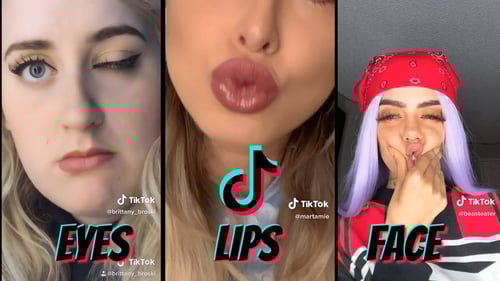
They also tapped creator signals by partnering with viral TikTok influencers like Brittany Broski (aka the “Kombucha Girl”) to seed the campaign authentically. By aligning the campaign with the platform’s native language (short, catchy music-backed videos and relatable creators), e.l.f. applied a predictive playbook for virality instead of crossing their fingers.
Crucially, e.l.f. cultivates these signals in an ongoing way. Ekta Chopra, e.l.f.’s Chief Digital Officer, has noted that the brand “looks for signals and jumps in — we don’t wait, we don’t dwell”.
e.l.f. can spot a budding trend or consumer sentiment (say, a rising hashtag or an ingredient craze) and plan a creative response before the trend peaks.
Their edge? They plan for virality with eyes wide open. It treats every campaign launch as an experiment fueled by intelligence: which creator archetypes are on the ascent, which visual styles are clicking, which audience micro-communities are igniting? This front-end analysis is what allows the brand to consistently hit the mark – engineering virality rather than hoping for a lucky break.
The #EyesLipsFace Breakthrough: 1 Billion Views in Days

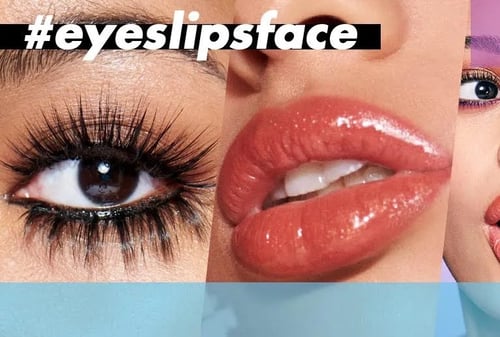
All that planning and signal-reading paid off when e.l.f. launched the now-legendary #EyesLipsFace challenge on TikTok. In October 2019, the brand dropped its custom-created 15-second track “Eyes. Lips. Face.” and invited TikTok users to get creative with it.
The result was a social eruption. The campaign became the most viral in TikTok U.S. history, racking up about 5 million user-created videos and over 7 billion views in total. It was, notably, the fastest TikTok campaign ever to hit 1 billion views – reached in just six days. Importantly, these weren’t passive views on brand-posted content; they were driven by massive active participation.
Everyday users and mega-celebrities alike jumped in: famous names like Ellen DeGeneres, Lizzo and Reese Witherspoon joined the fun organically, amplifying the signal even further.
Why did #EyesLipsFace explode? e.l.f.’s engineered approach ensured the campaign contained the right ingredients for TikTok success.
The original song was hooky and meme-ready, designed around the platform’s content signals (snappy music drops, a beat that invites a dance or pose) – so much so that it caught on beyond TikTok, even charting on Spotify’s global viral chart. The challenge itself was simple and inclusive, aligning with audience signals that Gen Z craved authentic, easy-to-remix content.
And by launching when TikTok was on the cusp of breaking into the mainstream, e.l.f. rode a cultural signal – timing their moment when a new wave of users were looking for trends to latch onto. The outcome was a signal intelligence masterclass: e.l.f. had essentially reverse-engineered the anatomy of a viral hit, proving that with the right data insights, a brand could manufacture cultural moments at scale.
Notably, e.l.f. didn’t rest once the initial wave hit. When the COVID-19 pandemic struck in early 2020 – just after #EyesLipsFace had gone viral – the brand swiftly iterated in real time. Sensing a cultural shift, they remixed their own hit. The track turned into a public health PSA (“Eyes. Lips. Face. Safe.”) practically overnight, adapting the fun meme into a hand-washing and mask-wearing reminder.
This quick pivot kept e.l.f. culturally relevant (and earned praise for its agility) at a moment when many brands went dark. It’s a prime example of e.l.f.’s measurement loop in action: they were closely watching engagement and sentiment signals, and they weren’t afraid to tweak the campaign narrative on the fly to match the audience’s mindset.
That adaptability reinforced e.l.f.’s reputation as a brand that gets it – building even more goodwill and engagement during an otherwise challenging time.
Always-On Iteration: From Challenges to Community
One viral hit can be a flash in the pan, but e.l.f. was determined to turn fleeting attention into lasting community. Following #EyesLipsFace, the brand doubled down on TikTok with an always-on content strategy that treated social like a continual experiment.
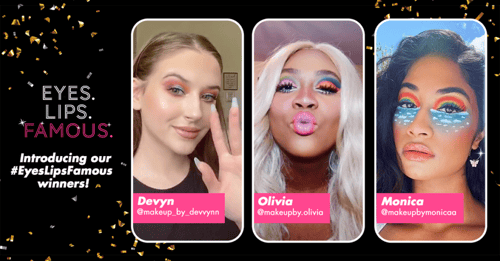
They launched the first-ever TikTok-native reality show, “Eyes. Lips. Famous.”, in mid-2020 – a clever initiative born directly from reading audience desires.
E.l.f. saw a signal that many Gen Z users aspired to become beauty influencers themselves, so they created a contest-campaign to tap into that. The reality show (released as daily bite-sized TikTok episodes) invited fans to compete for a chance to become e.l.f.’s next big content creator.
This not only sustained engagement (garnering over 40 million views during the series run) but literally expanded e.l.f.’s creator network by elevating new influencers from its own community. In essence, e.l.f. turned viewers into participants, and participants into brand ambassadors – a savvy way to stack audience and creator signals together for compounding impact.
Throughout 2020, e.l.f.’s TikTok presence snowballed into a full-fledged cultural ecosystem. The brand released additional original songs and even a holiday music album featuring TikTok stars. Each campaign or content drop was run like a measurement loop: performance data and feedback were gathered in real time, then immediately used to inform the next move.
For instance, when e.l.f. noticed certain comedic skits or musical riffs resonating on their channel, that insight shaped future creative (the team knew what punchlines or aesthetics were likely to land). If a particular influencer’s content spiked engagement, e.l.f. would bring them back or amplify them further – effectively optimizing creator selection via signals rather than pure follower counts.
This iterative cycle – plan, execute, measure, refine – is how e.l.f. scaled up its social performance systematically. The brand wasn’t just riding one viral wave; it was building a repeatable engine for cultural relevance. In the words of e.l.f.’s CMO Kory Marchisotto, they embraced a “renegade spirit” and a willingness to “do things neither of us have done before” in partnerships, cultivating an image as a bold innovator. That reputation further fueled their momentum, as fans began to eagerly await “what will e.l.f. do next on social?” – a sign that affinity and advocacy were taking root, not just one-time awareness.
When Virality Meets ROI: Turning Buzz into Business
For e.l.f., viral fame wasn’t the goal. Business growth was. What sets the brand apart is how effectively it converted billions of views into measurable outcomes: brand equity, sales, and market share.

Cultural Relevance That Converts
Thanks to TikTok-driven momentum, e.l.f. soared from the #8 to the #2 favorite teen beauty brand in just one year, ultimately becoming #1 among Gen Z females with a 16% share. This wasn’t just awareness. It was deep affinity driven by engineered social performance.
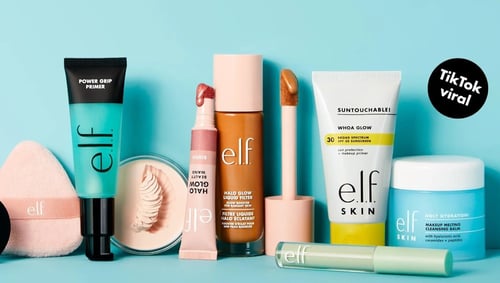
When e.l.f. launched the Halo Glow Liquid Filter, TikTok virality fueled a 75,000-person waitlist and immediate sellouts. The same happened with its Chipotle and Liquid Death collabs. One sold out in under 4 minutes, the other in 45 minutes. Each campaign was a product of reading cultural signals and moving fast enough to meet surging demand.
While legacy beauty brands struggled, e.l.f. posted 17 consecutive quarters of sales growth. In fiscal 2023 alone, revenue jumped 48% YoY, outpacing the overall market. That momentum helped e.l.f. climb into the #3 spot among mass cosmetics brands, surpassing much larger rivals. Investors took notice — e.l.f. became a Wall Street “growth powerhouse.”
A Self-Reinforcing Performance Loop
Behind this success is a system: e.l.f. uses social signals to fuel predictive product development, launch timing, and content strategy. Each meme, collab, or trend adds to a data feedback loop that strengthens brand positioning and builds a cultural relevance moat competitors can’t easily replicate.
In short, e.l.f. engineered the system that keeps creating them.
Engineering Social Performance: Lessons from e.l.f.’s Playbook
E.l.f. Cosmetics offers a real-world blueprint for how to engineer social performance – not by chance, but by design. Their rise shows that social media success is no longer about luck; it’s about using signal intelligence, creative precision, and rapid feedback loops to generate measurable business impact.
Use Signals to Predict, Not Just React
E.l.f. built its TikTok dominance by spotting early behavioral signals – mentions, hashtags, and creator momentum – and planning around them. Rather than waiting for trends to emerge, the brand moved early and intentionally, designing content to fit what the data showed would resonate. This is predictive planning in action: using signals to shape strategy before spend.
Blend Data and Creativity
Every e.l.f. campaign begins with data-informed hypotheses. They pair insights (e.g. which formats hook attention, which creators drive trust) with bold creative ideas like original songs and interactive challenges. This fusion of analytics and artistry is what turns cultural intuition into high-performance marketing.
Operate in Real Time
Agility is baked into e.l.f.’s system. Their team iterates quickly – remixing campaigns mid-flight, jumping on trends like Liquid Death or COVID-safe PSAs within days. This requires a tight measurement loop where dashboards, team feedback, and audience response continuously feed the next move. Speed matters. Signals fade quickly, and e.l.f. doesn’t wait to act.
Activate Your Community
Rather than pushing messages at audiences, e.l.f. invites mass participation. Their TikTok challenges turned millions of fans into co-creators, effectively outsourcing distribution to the community. This not only supercharges reach through UGC, but builds loyalty. By focusing on community signals like fan sentiment and share behavior, e.l.f. made its audience a growth channel.
Link Engagement to Equity
Most importantly, e.l.f. connects the dots from views to value. Campaigns aren’t measured by vanity metrics but by impact on product sell-through, brand preference, and market share. Viral hits like Halo Glow and the Chipotle collab drove immediate sellouts – but more importantly, they built long-term brand affinity and acquisition. That’s how you turn cultural relevance into ROI.
The takeaway:
e.l.f. didn’t get lucky. They built a playbook grounded in signal intelligence, creative boldness, and fast-cycle iteration. For CMOs and social strategists, the lesson is clear: social success is a discipline, not a dice roll. In a world where attention is fleeting and culture moves fast, the brands that will win are those who treat social like a system – measured, modeled, and engineered to perform.