

The platform turning inspiration into action
We all know Pinterest as the place people go to find wedding centerpieces, kitchen backsplashes, outfit ideas, or meal prep recipes.
But this read is starting to look flat and outdated.
The important distinction is intent. People come to Pinterest to plan. Whether that’s planning for a home renovation, which outfit they need for a summer festival, a family holiday or beauty routine, they’re coming to the platform primed to action on a product.
Pinterest now has 631 million monthly active users, up 11% year over year in Q1 2026. Revenue hit $1.01 billion that same quarter, up 18% year over year. The company had already reached 600 million monthly active users in Q3 2025, when CEO Bill Ready described Pinterest as an "AI-powered shopping assistant" for consumers.
So we need to see Pinterest as more than a mood board. It is a visual search engine and a place to shop, often in the same session. More simply: this is the platform where visual inspiration online turns directly into action in real life.
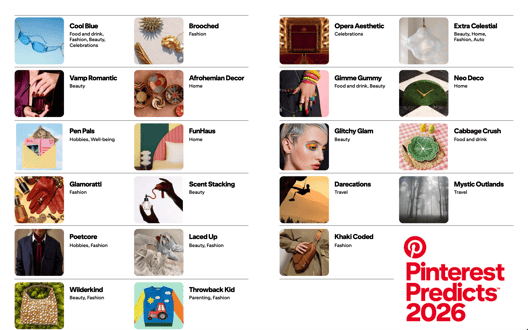
To ground this edition, we spoke with Pinterest about the platform’s evolution from a source of inspiration into a full-funnel shopping destination. The big picture: Pinterest gives brands a way to meet users at the moment of intent, often before they have the exact words to describe what they are looking for. That is where its visual nature becomes especially powerful. Compared with text-led discovery platforms, Pinterest helps people discover what they want by showing them what is possible.
So, this month, we're getting into how Gen Z uses Pinterest, why AI is a bigger deal here than on most platforms, and the reason brands keep underestimating it.
Let’s decode it.
Pinterest by the numbers
📌 631M monthly active users. Pinterest reached 631 million global monthly active users in Q1 2026, up 11% year over year. Revenue hit $1.01B, up 18%.
🛍️ The #1 reason people use Pinterest is to find new products and brands. Pinterest’s own business page frames the platform as a place where people discover, plan, and shop.
🔎 Search is the center of the platform. Pinterest reported that it sees around 80 billion monthly search queries, with about two-thirds of platform interactions tied to search.
🛒 Pinterest helps consumers make a final decision. Abandoned carts are not really a checkout problem, they are a decision problem. Pinterest bridges this gap with curation. 90% of Pinterest users say they find products relevant to them.
👀 Gen Z is using Pinterest for their identity-building. Vogue Business noted that Pinterest reported that Gen Z accounts for over 40% of Pinterest’s global monthly active users and saves nearly 2.5x more Pins than other age groups.
🤖 AI is powering the shift from inspiration to conversion. Pinterest’s Performance+ tools are being used to automate bidding, targeting, creative resizing, and conversion optimization. Pacsun’s use of Pinterest Performance+ drove a 7x increase in conversion rate.
Pinterest is not what marketers think it is
The outdated assumption about Pinterest is that it is just a photo-sharing platform. Our conversation with Pinterest made clear that the platform is now a full-funnel shopping destination where brands can show up when users are already in a planning mindset.
Pinterest’s own business materials now position it as a place where people "discover new ideas, plan and shop," and where advertisers can reach audiences across the consumer journey. The same page says the #1 reason people use Pinterest is to find new products and brands.
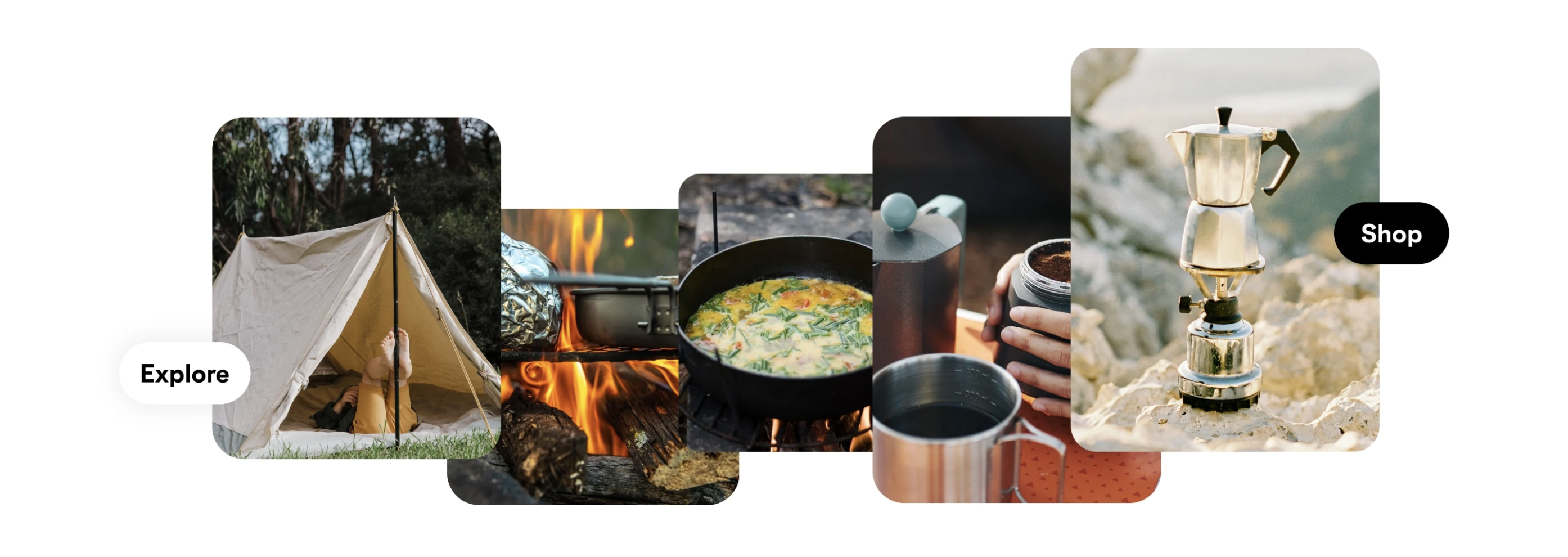
The important distinction is intent. People come to Pinterest to plan. Whether that’s planning for a home renovation, which outfit they need for a summer festival, a family holiday or beauty routine, they’re coming to the platform primed to action on a product.
This distinction matters because planning behavior sits closer to buying behavior than passive scrolling does.
The search engine for taste
Pinterest’s biggest advantage may be that it understands something most search engines still struggle with: people do not always have the words for what they want.
You know the feeling. You see a room and like the vibe, but you do not know if it is "warm minimalism," "soft industrial," "Japandi," or just "that one apartment with the green couch." You see an outfit and what grabs you is the silhouette, before you could name a single brand or piece. The feeling shows up before the search term does.
This is Pinterest’s lane. Business Insider reported that Pinterest handles about 80 billion monthly search queries and that roughly two-thirds of interactions on the platform are search-related. Pinterest CEO, Bill Ready says Pinterest is especially useful for connecting people to products and aesthetics they "may not have the words to describe."
Pinterest is building around that gap between desire and language. In 2025, the company introduced AI-powered visual search tools for fashion that use a Visual Language Model to generate descriptive terms from image Pins. Pinterest can look at an image, decode the style, and help users refine what they are searching for by color, fabric, fit, or occasion.
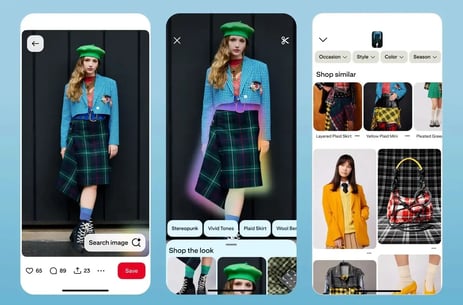
That sounds small until you think about how people actually shop. Search used to start with a word but now, increasingly, search starts with a feeling.
Pinterest supports discovery and planning in a way that feels more natural to users, backed by the "taste graph," which uses signals from user actions to improve relevance and connect people with ideas that match their interests.
Pinterest takes Pinners from dreaming to deciding
Curation is the key to reducing indecision and it’s especially important for Gen Z (Pinterest’s largest and fastest growing demographic), which uses creative personalization to refine and refresh their identities. Pinterest tells us they’ve spent years designing a platform with curation at its core. It’s that feeling you get when you open the app and immediately think, “Pinterest just gets me”. That’s the Pinterest AI-powered Taste Graph at work, trained on billions of real human interactions and preferences, evolving over time as shoppers and their taste preferences change.
Pinterest says this is also the key to the ‘abandon cart’ problem. People abandon carts because of indecision and Pinterest fills that gap. 90% of Pinterest users say they find products relevant to them, and 39% of Gen Z now start their search on Pinterest.
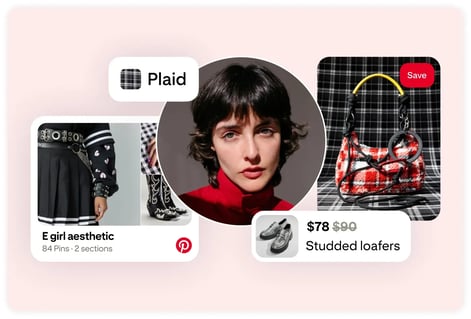
That framing feels especially relevant now, when shoppers are sorting through endless options and trying to avoid the nagging sense that a better one is still out there. Pinterest solves this curation problem and helps people see what is relevant, refine their taste, and makes them feel certain enough to say yes. That is where the platform believes it has an edge.
This app is not just where people find ideas but the place where users gain enough confidence to make a decision.
Gen Z is using Pinterest as an identity toolkit
Vogue Business reported that Gen Z accounts for over 40% of Pinterest’s global monthly active users and saves nearly 2.5x more Pins than other age groups. Pinterest’s creator site also describes Gen Z as its fastest-growing and most engaged audience.
The more useful insight, however, is HOW Gen Z uses Pinterest over other audiences.
Pinterest noted that millennials often use Pinterest for purpose-driven planning, while Gen Z uses it more like an identity toolkit. They build aesthetics, explore fandoms, and map their future selves. They collage their taste before they necessarily buy anything.
For millennials, Pinterest was often the project board: wedding, nursery, kitchen, holiday dinner. But now, for Gen Z, Pinterest is closer to the self board: who am I becoming, what do I like, what world do I want to live in, what version of myself am I trying on?
The public data backs the format’s momentum. Pinterest said collage creation rose 418% since the beginning of 2024 after the feature was integrated into the main Pinterest app.
For brands, this changes the assignment on Pinterest for not only selling a product but trying to become part of someone’s taste system.
Turning inspiration into performance with AI
Pinterest is using AI across the whole platform, from how it surfaces ideas to how it shows advertisers what's selling.
Performance+ is the advertiser-facing version of that shift. Performance+ is a suite of AI-powered tools for creative generation, background creation, targeting, image resizing, and bidding. Roughly 30% of lower-funnel revenue is currently generated through Performance+ campaigns, and advertisers using these tools grew lower-funnel spend twice as fast as those who did not adopt them in Q1 2026.
And public case studies show us how this is playing out.
Pacsun used Pinterest Performance+ ROAS bidding for holiday campaigns aimed at Gen Z shoppers. Pinterest’s case study says Pacsun drove a 7x increase in conversion rate, a 3.5x increase in return on ad spend compared with the previous year, and a 34% jump in ROAS from direct response efforts.
-2.png?width=2506&height=1046&name=image%20(4)-2.png)
Mazda is another useful proof point. The brand used Pinterest’s offline conversion solutions with Urban Science and LiveRamp to connect Pinterest engagement to dealership sales. The result: a 43x return on ad spend from Pinterest campaigns and a 30% lift over Mazda’s Pinterest benchmark for dealer hand-off actions.
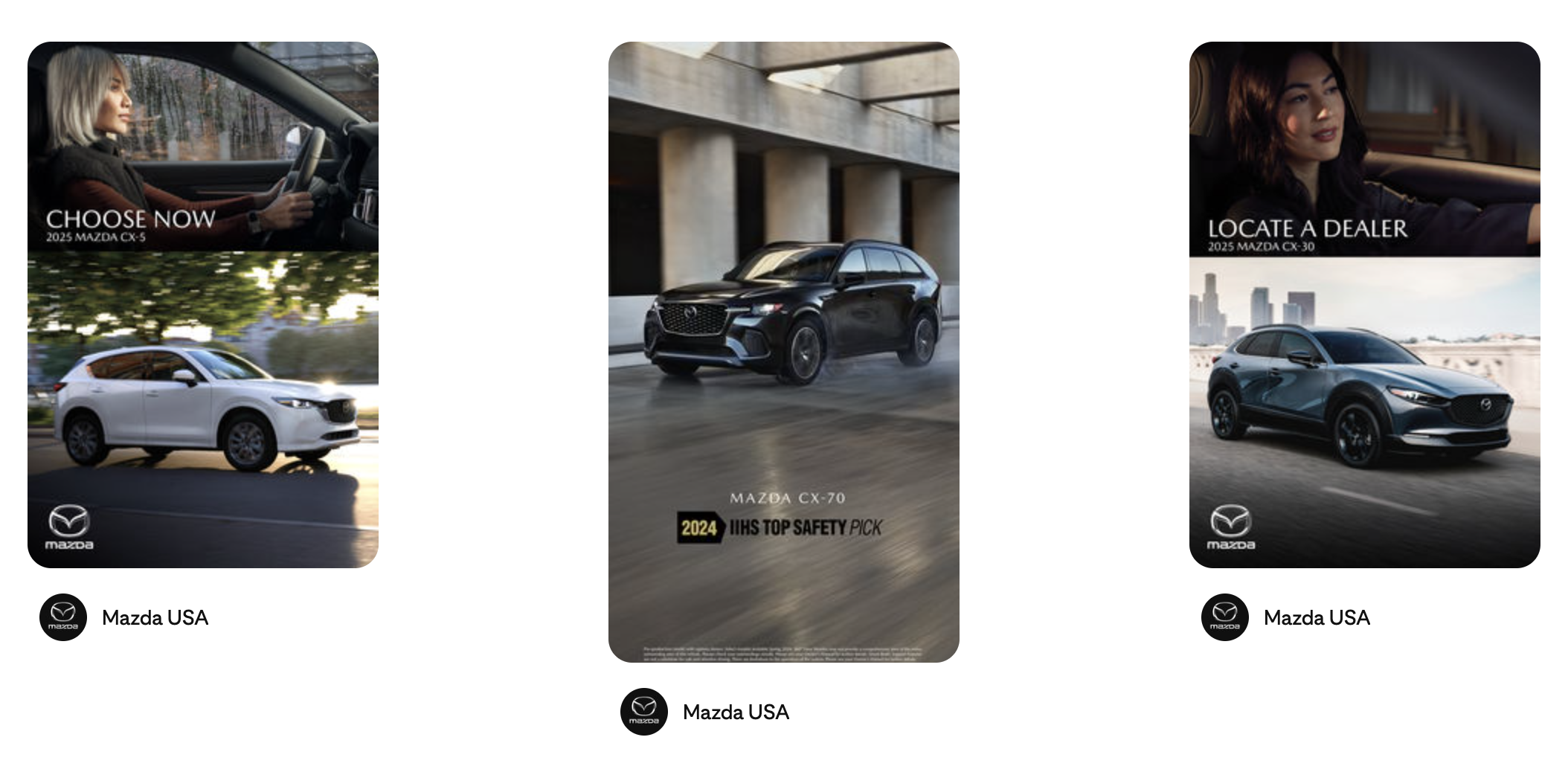
That case matters because it answers the question marketers always ask: can Pinterest prove sales if the purchase happens somewhere else?
Increasingly, yes. Performance+ is helping move Pinterest from an inspiration-only perception into a full-funnel performance model. The goal is to reduce friction for advertisers by automating the pieces that make lower-funnel campaigns work harder.
This is where Pinterest gets dangerous for competitors. It has the nice, aspirational top-of-funnel behavior. But it is building the measurement and automation stack to make that behavior perform.
Pinterest ads perform when they belong
The best ads behave like Pins people would have saved anyway: useful, visual, and tied to what someone is already planning.
Pinterest says the starting point is surprisingly practical: brands need to upload their full product catalog so Pinterest has something real to work with.
The best Pinterest creative usually does one of three things: it helps someone decide, it helps someone imagine, or it helps someone do.
Recipes, styling guides, room boards, gift guides, travel plans. These map onto how people already use Pinterest, which is the whole point.
Pinterest’s own ads page says people use the platform to find new brands and ideas, so ads can be useful rather than interruptive. It also describes Pinterest ad solutions across awareness, consideration, and conversions. And that is why creators on Pinterest work differently too.
Pinterest considers everyone a creator, but success is measured less by follower count and more by the quality and utility of the content. A recipe, craft tutorial, styling guide, or helpful board can outperform personality-led content because the platform rewards usefulness. And Pinterest’s creator page backs that up. It tells creators they can grow an audience, cross-post content, and drive traffic to their own site or destination.
Why Pinterest is worth your attention
The weird thing about Pinterest is that it does not feel urgent until you realize how close it sits to the buy.
People don't open Pinterest to kill time or keep tabs on anyone. They open it to plan something of their own. A new apartment, a different style, a trip, a dinner party, some better-put-together version of themselves.
That is why Pinterest matters. This is the platform that catches people in the messy middle, before they know the exact product, brand, or even search term. Then it helps them turn that into something real and, eventually, buy.
For marketers, the mistake is viewing Pinterest as a place to park leftover social assets. That will not work here. The brands that are successful on Pinterest are the ones that understand the assignment: be genuinely useful, look like you belong there, and show up while people are still making up their minds.
Pinterest is not trying to be the loudest platform in the room. That might be the point.
It's quieter and more intentional, built around taste rather than noise.

.png?width=300&height=300&name=July%20lists%20and%20blogs%20(1).png)

.png?width=300&height=300&name=May%20lists%20and%20blogs%20(19).png)