
Key takeaways
- Camp Snap illustrates how a retro-inspired product can meet a practical need by removing the screen and immediate photo review.
- Build nostalgia marketing around a familiar experience people can participate in, rather than relying on visual recognition alone.
- Connect nostalgic references across packaging, content, and experiences so the idea supports a recognizable brand identity.
- Test whether the experience remains useful or enjoyable when the retro styling is removed.
Every Brand Suddenly Wants to Be 2003 Again. But Why?
Hilary Duff is back on a world tour. Camp Rock has another sequel. And millennials are rushing to stores to buy up Pokémon cards again.
What year is it, exactly?
If you've felt like you've accidentally time-traveled back to the early 2000s lately, you're certainly not alone. Nostalgia is having a moment, and brands have apparently received the memo.
At first glance, it all looks like another cycle of retro marketing. After all, fashion, entertainment, and pop culture have been recycling the past for generations.
Nostalgia marketing draws on familiar memories, cultural references, and rituals to connect with an audience. Retro marketing emphasizes the look or style of an earlier period; a nostalgia marketing strategy also considers what people valued about the experience.
But there's something different about the current obsession with all things analog.
Maybe we're not collectively yearning for 2003 because it was such a remarkable year. Maybe we're yearning for a time when taking a photo didn't require 47 attempts, going to a concert didn't mean staring through someone else's phone, and the internet was somewhere you visited rather than somewhere you lived.
And for brands willing to look beyond butterfly clips and pixelated fonts, there's a pretty interesting opportunity hiding underneath all that nostalgia.
Doing less is the selling point
Trevor George, president and lead investor at Camp Snap, a screen-free, reusable digital camera designed to mimic the simplicity and nostalgic look of a disposable film camera, has a theory about why everyone suddenly wants to go backward.
"I think vintage is always perpetually in," he explained in an interview with Viral Nation. "It just depends on what era."
He's right. Every generation eventually rediscovers the trends, music, and cultural artifacts of its childhood. Those memories become particularly commercially interesting once that generation has disposable income.
But when Camp Snap founder Brian created the company's original camera, nostalgia wasn't necessarily the business strategy.
His kids needed something to take to summer camp, where screens weren't allowed. Disposable cameras were an option, but they came with an obvious problem: limited exposures, development costs, and the possibility of coming home with 27 pictures of absolutely nothing.
So he built a digital alternative. The original Camp Snap camera could hold thousands of photos, could be recharged and reused, and required no film development. But it kept the defining characteristic of a disposable camera: no screen, so you couldn't immediately see the pictures you'd taken.
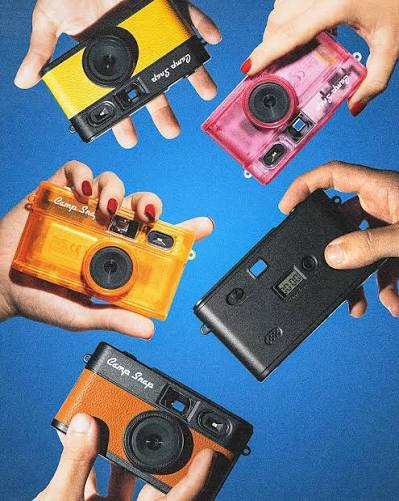
The product was initially built around utility. Then something interesting happened…
Adults started buying it.
"All these other generations started taking a liking to the camera because it allowed them to live in the moment," Trevor explained.
While Camp Snap's retro appearance certainly contributes to its appeal, Trevor sees its missing screen as the more important feature.
Consider the modern ritual of taking a group photo: everyone gets into position. Someone takes a picture. Someone else wants to see it. Another person doesn't like how they look. You take six more. Then come the filters, adjustments, and decisions about whether the picture is worthy of posting.
Congratulations. You've successfully turned a perfectly enjoyable moment into an unpaid photography assignment.
Camp Snap removes that entire process.
"We find that the best photos from our cameras are the blurry ones or the candid ones with the subject with their eyes closed," Trevor said.
It's a charming observation, particularly in an era where virtually every digital platform encourages us to present a more polished version of ourselves.
And it raises a question for marketers: What happens when the imperfections we've spent years removing become the very things consumers find desirable?
Simplify the customer experience
There's a lesson here that extends well beyond cameras. We're conditioned to believe that better customer experiences require adding something. Another feature. Another personalization layer. Another opportunity to interact with the brand.
But Camp Snap has built its appeal around removing something that other camera manufacturers spent years perfecting.
What if more brands approached innovation this way?
Think about the last experience your company built. Did every feature genuinely make it better, or did some of them simply give customers more decisions to make?
Camp Snap's success suggests there's an opportunity to rethink what consumers actually value. Sometimes, removing friction means removing features, too.
“We literally, as a society, basically live within either one of two operating systems, Android and Apple OS, and both want to be everything to everyone all the time. But what if we don't want that all the time?”
Trevor George, President and Lead Investor, Camp Snap
Why the past is looking pretty good from here
Trevor believes the current wave has less to do with the past itself and more to do with how consumers feel about the present.
"It's not like the consumer is yearning vintage. It is that they are tired of the newsfeed and so they want the cozy, warm, fuzzy, simple feeling that they had when they were younger growing up."
Think about what an average day online looks like in 2026. You wake up, check a dozen notifications, scroll through content selected by an algorithm, encounter AI-generated images, and spend the rest of the day bouncing between screens demanding your attention.
Even your downtime comes with a feed to refresh.
And while we have access to more entertainment, information, and convenience than ever before, there's something appealing about remembering when entertainment was a little less accessible. When you'd rent a movie from Blockbuster, wait for your photos to develop, or spend a Saturday morning watching cartoons without simultaneously checking your email.
That might explain why Kellogg's decided 2026 was the year to bring physical toys back inside cereal boxes for the first time in more than a decade.
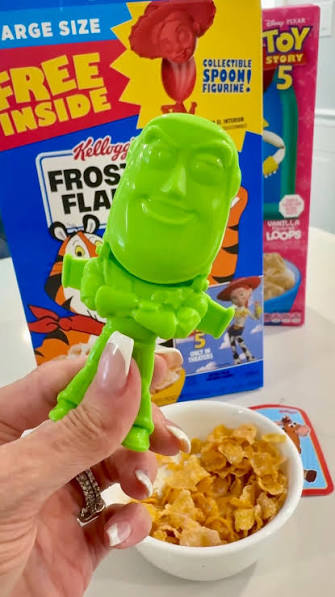
Watch the cereal-box toy promotion on Instagram.
The promotion, tied to Pixar's Toy Story 5, tapped into something millennial parents already understood: the excitement of digging through a cereal box to find a little plastic surprise.
For children, it's a toy. For parents, it's an opportunity to recreate a small piece of their own childhood.
And notably, nobody needs to download an app to enjoy it.
Neopets offers another example.
In August 2026, the digital pet platform that first captured the attention of internet users in 1999 opened its first physical pop-up at Shopify NY.
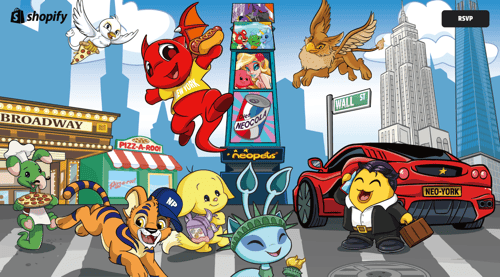
Fans could visit a real-life Trading Post, browse merchandise, play a plushie claw machine, and participate in activities connected to the online world they'd known for decades.
Watch the Neopets pop-up video on YouTube.
Something that existed largely on a computer screen during childhood had become a physical place they could visit. And fans were being invited to do something with that affection.
Turn recognition into participation
There's an important marketing distinction between reminding people of something they loved and giving them a chance to experience it again.
Kellogg's could have produced a commercial about the good old days of Saturday morning cartoons. Neopets could have launched a nostalgic social campaign featuring screenshots from the early 2000s.
Both probably would have generated a few smiles. Instead, they gave consumers something to physically do.
Nostalgia might earn a brand a moment of attention, but participation gives consumers a reason to spend more time with it, share the experience, and potentially introduce it to someone new.
For marketers sitting on years of brand history, this opens up possibilities beyond another anniversary campaign or throwback post. Think about the rituals, traditions, or experiences your customers once associated with your brand.
Which of those could you actually bring back?
And if your brand doesn't have decades of history to draw from, consider what familiar experience you could reinterpret for today's audience.
The objective isn't necessarily to bring an old product back. It's to bring back something people enjoyed being an active participant in.
For brands developing a physical activation, Viral Nation’s experiential marketing services bring together experience design, creators, and content planning.
Is this a nostalgia trend or something much bigger?
There's an important caveat to all this excitement about the past.
Nostalgia is cyclical. The decade everyone is obsessed with today will eventually be replaced by another.
Trevor makes that distinction himself: "Analog, to your point, is a trend. But the screen-free, distraction-free piece is not. I think it is a new category."
We're becoming increasingly aware of how much time we spend staring at screens and how AI is changing the content we encounter every day. Trevor believes the appetite for simpler products will only grow as consumers look for opportunities to disconnect.
And importantly, he isn't suggesting everyone abandon modern technology.
Camp Snap customers still use smartphones. They still enjoy the conveniences of connected devices. They simply want moments when those devices aren't running the show.
"We always say that the Camp Snap community wants to live a more distraction-free life," Trevor explained. “They don't want to give up everything else. They still want the Oura Ring. They want pieces of their iPhone. They want Apple CarPlay sometimes throughout the day, but there's also just sometimes where you want nothing.”
That, right there, is the point brands and marketers need to remember. Because consumers aren't necessarily rejecting innovation. They're becoming more selective about when innovation improves an experience and when it gets in the way.
For example,
- A camera with fewer features can make a night out more enjoyable.
- A physical toy can make breakfast more exciting.
- A familiar online game can become an opportunity to meet people in person.
In each case, the brands are offering a different kind of value from the constant connectivity we've grown accustomed to.
And that creates an interesting tension for an industry that's spent years optimizing practically every customer interaction.
Sometimes, the better experience might be the one with fewer features.
So, can you manufacture a childhood memory with a retro font?
Of course, there's a difference between building a brand around an emotional experience and simply borrowing the visual language of another decade.
Vacation, the sunscreen brand, has become a particularly interesting example of the former.
Its entire identity feels like an artifact from a fictional 1980s resort, complete with vintage-inspired advertising, music, product packaging, and a wonderfully specific sense of humor.

The branding works because the references are part of a cohesive world that consumers can recognize, enjoy, and participate in. That consistency gives the idea room to extend beyond a single seasonal campaign.
A throwback font can communicate a decade. An old jingle can trigger recognition. Bringing back a discontinued product can generate excitement.
But none of those things automatically creates a meaningful connection.
The stronger examples start with an understanding of why consumers are drawn to a particular memory in the first place.
Again, Camp Snap discovered that a camera without a screen could offer something more valuable than the ability to immediately review a photo: a little freedom from thinking about the photo at all.
If audiences are increasingly drawn to experiences that feel imperfect, personal, and distinctly human, brands should be asking whether their creative decisions are reinforcing those qualities or gradually removing them.
Build a consistent brand identity
Vacation hasn't simply borrowed the visual identity of another decade for a seasonal campaign. The company has made a fictional version of that era recognizable across its packaging, advertising, product names, and brand experiences.
You could encounter the brand in multiple places and still feel like you're stepping into the same universe.
That consistency is what makes the concept memorable.
For marketers, the question is whether nostalgia has a meaningful role in the brand's larger identity or whether it's simply the creative direction of the month.
Viral Nation’s social strategy services connect audience and cultural insight with creative direction, helping teams decide where an idea belongs in the wider brand plan.
Could the idea extend beyond one campaign? Is there room for customers and creators to participate in it? Would the experience still be interesting if retro aesthetics stopped trending tomorrow?
If the entire strategy falls apart once you remove the vintage typography, there probably wasn't much of a strategy to begin with.
A nostalgia marketing strategy checklist
Before committing to a nostalgic creative direction, ask:
- Which memory matters? Identify the ritual, feeling, or experience the audience recognizes.
- What does the idea offer today? Explain the practical or emotional value beyond its appearance.
- How can people participate? Give customers or creators something to do, interpret, or experience.
- Does it fit the brand? Connect the idea across relevant packaging, content, and customer experiences.
- What remains without the retro styling? Check whether the experience still gives people a reason to care.
Maybe the future of marketing looks a little like the past
It's tempting to look at the return of Neopets, disposable-style cameras, cereal-box toys, and mid-2000s pop culture and conclude that consumers simply miss being kids.
There's probably some truth to that.
But the more interesting possibility is that the past has become a reference point for something people feel is missing from the present.
- Uninterrupted experiences
- Genuine surprises
- Imperfect memories
- The ability to enjoy something without immediately documenting, editing, sharing, or optimizing it
For brands, that doesn't mean every campaign needs a Y2K makeover or a discontinued product brought back from the dead.
It means paying closer attention to the experiences consumers wish they could have again, and understanding what made those experiences meaningful in the first place.
Because the next big opportunity in marketing might not require a more sophisticated algorithm, another layer of personalization, or an entirely new technology.
It might require giving people a reason to put their phones down. Even if it's only long enough to eat a bowl of cereal and find the toy at the bottom.
Frequently asked questions
What is nostalgia marketing?
Nostalgia marketing uses familiar memories, cultural references, or rituals to connect a brand with its audience. The article’s central recommendation is to identify the experience people value, then build the creative idea around it.
What can marketers learn from Camp Snap?
Camp Snap shows how a retro-inspired product can serve a practical need. Its screen-free camera removes immediate photo review, giving marketers a useful question to test: would fewer features make the customer experience better?
Can newer brands use nostalgia marketing?
Yes. A newer brand can reinterpret a familiar experience without claiming a history it does not have. The idea should fit the brand’s identity and offer something audiences can enjoy beyond recognizing a retro design.
How can brands use nostalgia in social media?
Give audiences and creators a way to participate in a familiar ritual or share their own memories. Keep the idea consistent with the wider brand experience, and let sharing remain optional when the experience is designed to reduce distraction.