
• Mystery marketing drives 5x engagement through designed curiosity
• Information gaps keep audiences invested longer than full reveals
• Unbranded seeding shifts content from promotion to participation
• Anticipation often creates stronger impact than the final reveal
An influencer opens a package on camera.
There’s no branding.
No product name.
No instructions explaining what she’s holding.
She turns it over in her hands, describes the texture, guesses at the category. She asks her audience what they think. The comments fill instantly: theories, debates, confident declarations from strangers who feel oddly invested.
These campaigns are deliberately incomplete. And increasingly, that incompleteness is doing more work than full disclosure ever could.
Peach & Lily’s Intentional Removal
For Peach & Lily’s recent launch, the skincare brand intentionally removed itself from the frame. Influencers received unmarked glass bottles sent through an intermediary agency, paired only with an ingredient list and high-level scientific context.
Creators had to decide whether they were interested before knowing the brand behind it. Only later, at a formal reveal event, was the product revealed:
The result wasn’t confusion. It was focus.
Engagement rates reached five times the brand’s historical average. Not because people were being educated faster, but because they were being invited to participate. The content wasn’t “here’s what this product is.” It was “help me figure out what this might be.”
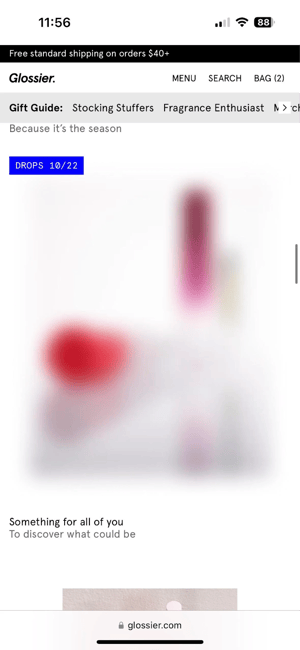
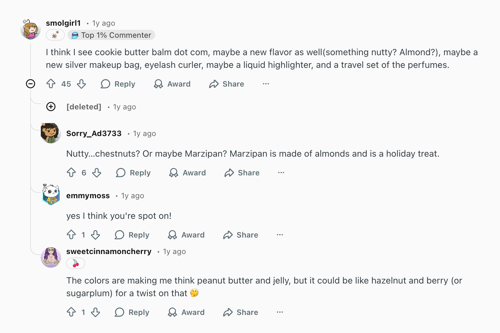
This same dynamic played out with Glossier’s blurred holiday calendar, where pixelated images sparked weeks of speculation across TikTok and Reddit. Fans came together to decode the drop.
Mystery as a System, Not a Gimmick
It’s tempting to describe these campaigns as “mysterious” and leave it at that. But mystery isn’t the goal. Designed curiosity is.
At its core, this strategy reintroduces friction into the marketing experience—not the kind that blocks progress, but the kind that slows resolution. Instead of collapsing the entire value proposition into a single scroll, brands are stretching it across time, touchpoints, and people.
This matters because modern audiences are exceptionally good at categorization.
“Oh, another serum.”
“Another snack brand.”
“Another limited-edition drop.”
The faster something can be categorized, the faster it can be dismissed. Mystery resists that reflex. When information is intentionally withheld, the brain can’t immediately decide where to file it.
Attention lingers.
The Psychology Doing the Heavy Lifting
This method of “mystery marketing” is grounded in how humans process uncertainty.
George Loewenstein’s Information Gap Theory explains curiosity as a form of cognitive discomfort. When people know something but not enough, the brain experiences that gap as a problem that needs solving.
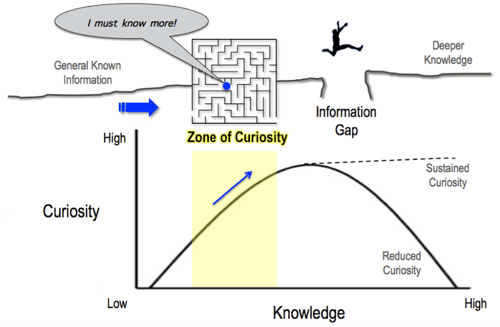
Mystery campaigns are engineered to open that gap just wide enough:
- Enough information to spark interest
- Not enough to satisfy it
That tension keeps people engaged longer than a complete explanation would.
Similarly, the Zeigarnik Effect shows that people remember unfinished tasks more vividly than completed ones. A mystery PR package, an unsolved puzzle, or an unbranded product turns a passive viewer into someone mid-task.
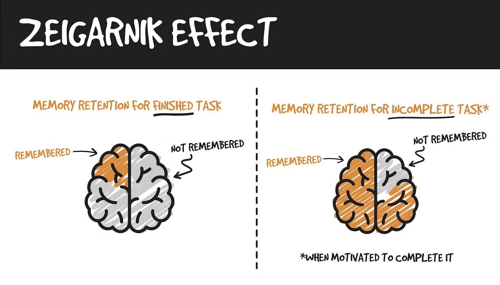
Source: Innovative Human Capital
That’s why audiences return to comment sections, check follow-ups, and look for updates. The campaign doesn’t end when the video does. It continues until closure arrives.
Again, psychological research consistently shows that anticipation activates dopamine pathways more strongly than the reward itself. The act of wanting — of getting closer — often produces more emotional intensity than the reveal.
Mystery stretches that anticipatory phase.
In an environment where answers are instant and gratification is immediate, this delay becomes its own form of value.
What Mystery Marketing Looks Like When It’s Done Well
The campaigns landing right now tend to fall into a few structural categories, each using incompleteness in a slightly different way.
Interactive Unboxings
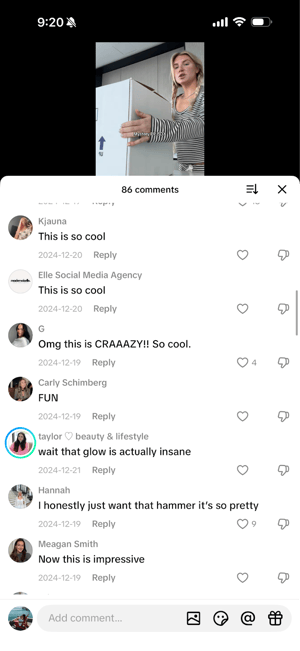
In L’Oréal’s hammer-and-box activation, each layer revealed how to proceed, but not why. Gloves suggested danger. Ice suggested preservation. The audience followed along because the logic unfolded step by step.
The mystery was guided in this case. Since the brand was clear in this campaign, viewers weren’t asking, “What brand is this?” They were asking, “What happens next?”
Cryptic Messaging and Blind Products
When Pringles launched mystery flavors, the absence of flavor names forced consumers to rely on sensory experience and collective guessing. Reviews became debates. Comments became data.
The product didn’t arrive with a story. The story emerged from interpretation.
Puzzles and Physical Keys
Glossier’s use of keys and codes transformed access into participation. Unlocking the PR made the reveal feel earned rather than delivered.
That effort matters. When audiences work for information, they value it more.
Unmarked Packages and Anonymous Seeding
Peach & Lily’s approach was effective precisely because it didn’t pretend mystery alone was enough. Creators received scientific context upfront, but the distinction protected trust while still leveraging curiosity.
You don’t have to take it to the same level as Peach & Lily, though. Unmarked packages alone can be effective, just like how PLouise did in their unmarked campaign here:
Although the brand is revealed when she opens the package, viewers remain interested and engaged because they want to see the items. The creator also does a good job at keeping the mystery alive by saying things like, “I don’t even know if this stuff is out yet.”
Why This Is Resonating Now
Context is doing a lot of work here. We live in a world of
- One-click purchasing
- Same-day delivery
- AI-generated explanations, comparisons, and reviews
Almost nothing requires waiting anymore. But mystery marketing reintroduces the feeling of process.
It’s the difference between scratching the lottery ticket and waiting for the results versus just scanning the barcode. The outcome might be identical, but the experience isn’t. Remove the ritual, and the excitement disappears.
Blind-box products like Labubus tap into this exact mechanism. Add collectibility and social proof, and the anticipation compounds.
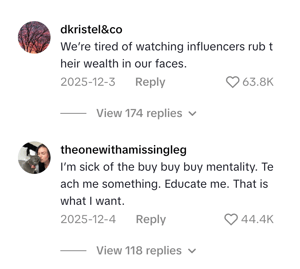
There’s another cultural undercurrent powering this shift, and it has less to do with novelty — and more to do with fatigue. Audiences are highly literate about advertising, and they’re more visibly aware of it in traditional influencer culture.
You can see it clearly in the response to creators like Jaclyn Hill, who recently posted about declining views. The comments weren’t sympathetic. They were blunt:
For years, influencer marketing has trained audiences to expect the same beats:
- A PR haul
- A polished reaction
- A product framed as a privilege
What once felt aspirational now often reads as performative, especially when the content centers on abundance rather than experience. PR hauls, in particular, have become a lightning rod. Comments increasingly call them out as flaunting or being out of touch.
Mystery marketing sidesteps that entire dynamic.
When the product arrives unbranded, the power structure shifts. The creator isn’t showing off what they received, but instead they’re working through something they don’t yet understand. The content stops being about ownership and starts being about discovery.
That’s why Peach & Lily’s approach mattered so much. Because no one knew which brand was behind the product at first, the content didn’t feel like promotion. It felt like participation.
Viewers weren’t watching someone be “chosen by a brand” — they were invited into the process of figuring something out.
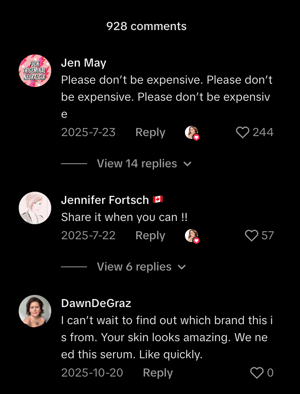
This changes how audiences relate to the content. And in a moment where audiences are tired of being talked at, being invited in feels genuinely new.
Where Mystery Fails (And Why Trust Is the Backstop)
Mystery amplifies attention. It does not forgive disappointment.
If the product can’t support the expectations created during the anticipation phase, the fallout is worse than a flat launch. Audiences don’t feel neutral; they feel misled.
That’s why mystery marketing works best in categories where:
- Sensory testing is meaningful
- Subjective experience matters
- There’s room for interpretation (beauty, wellness, fragrance, food)
In these spaces, guessing is part of the pleasure.
Used elsewhere, like for masking mediocrity, mystery becomes manipulation. Engagement spikes, but conversion doesn’t follow. Trust erodes quietly, then all at once.
What the Decode Era Signals
Designed curiosity respects attention by not demanding immediate belief. It creates space for speculation, social proof, and emotional investment before asking for commitment…
… Just long enough for anticipation to do what explanation can’t.
-1.png)
-2.png)
-1.png)