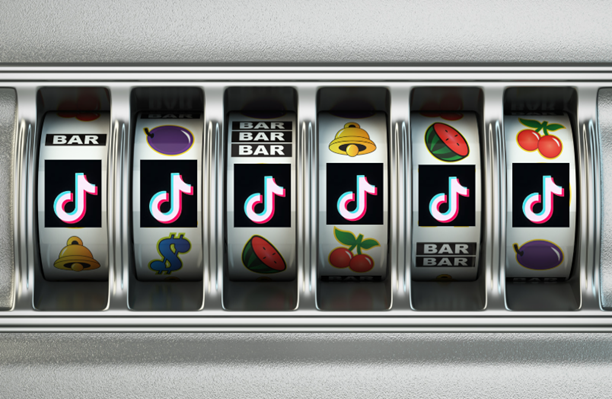
It’s the standard line from every creator who wakes up to ten million views and a crashing notification center. It’s a humble brag that preserves the magic of the internet, suggesting that the digital fairy godmother simply smiled upon them that Tuesday. But if you look under the hood of the TikTok algorithm in 2026, you’ll find that "luck" is the most expensive myth in marketing. For brands, relying on luck is a recipe for a burnt budget; for creators, it’s a path to a one-hit-wonder career.
Virality today is less like a lightning strike and more like a chemical reaction. If you have the right catalysts, the explosion is inevitable . If you miss even one reagent, you’re left with a cold, inert video that dies at 200 views.
By early 2026, TikTok has moved far beyond its "dancing teenager" era to become a sophisticated Generative Discovery Engine. The numbers for this year are staggering: TikTok is expected to facilitate over $15B in US social commerce GMV. This growth isn't driven by traditional, high-gloss commercials, but by content that feels like a glitch in the matrix that is content that is socially engineered to be unignorable. The platform is no longer just an entertainment app; it is a global marketplace governed by the laws of high-retention psychology.
The question for brands and creators today isn’t "How do I get lucky?" It’s "How do I build a video that the algorithm physically cannot stop showing people?"
1. The "Pattern Interrupt" Hook (The 1.5-Second Audit)
On TikTok, the first 1.5 seconds are a split-second audition. If you don't grab attention immediately, you aren't just losing a viewer, you are telling the algorithm that your content is "low-value noise." The algorithm tracks "bounce rates" with terrifying precision. If a significant percentage of users swipe away within the first second, the video is "throttled" and removed from the broader For You Page (FYP) ecosystem.
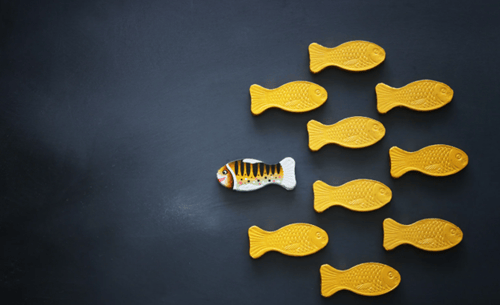
In 2026, the most successful hooks rely on Pattern Interrupts. This is a psychological trigger where the brain stops its "autopilot scroll" because it encounters something that doesn't fit the expected sequence. Most users scroll in a "theta state" which is a semi-conscious, passive flow. A Pattern Interrupt acts as an alarm clock.
The Three Hook Archetypes of 2026
|
Archetype |
The Hook |
Why It Works |
|
The Contradiction |
“Everything you know about (Topic) is a lie.” |
It creates an immediate "curiosity gap." The human brain is evolutionarily wired to resolve conflicting information. |
|
The Result-First |
Showing the final, satisfying product in frame one (1). |
It eliminates "payoff doubt." Users won't wait 30 seconds for a reveal unless you prove the reveal is worth it in second one. |
|
The Visual Friction |
A mascot or executive doing something "unhinged." |
Chaos is the ultimate scroll-stopper. In a world of polished, "aesthetic" feeds, something "ugly" or "weird" is the most honest thing on the screen. |
2. The Sonic Blueprint: Audio as a Memetic Container
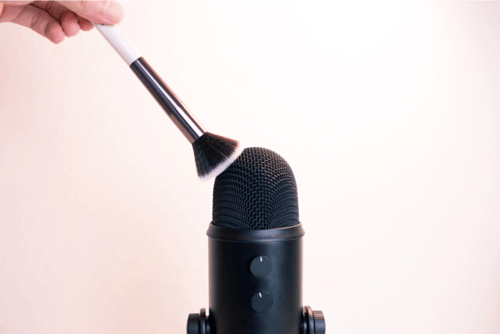
We often think of TikTok as a video platform, but in reality, it is an audio-first ecosystem. In 2026, viral hits don't just "use" sounds, they are built from the ground up around them. Successful creators treat audio as a "memetic container" or a familiar sound that tells the audience exactly what kind of emotional journey they are about to go on before a single word is spoken.
The "Earworm" Engineering
The 2026 algorithm prioritizes Audio Retention. Data suggests that if a user hears a sound they recognize within the first three seconds, they are 40% more likely to stay past the 5-second mark. Recognition creates comfort, and comfort keeps the thumb still.
- Secondary Audio Layering: This is a secret weapon for brands. Top creators are now "ghost-loading" trending sounds at 1% volume while using their own voiceovers at 100%. This allows the video to be indexed under a viral sound's search category. Essentially, they "piggybacking" on a trend, while remaining an original piece of narrative content.
- The "Micro-Bop": We are seeing a move away from 30-second songs toward 7-second audio loops. Why? Because the shorter the audio, the more likely the video is to loop. When a video loops, it sends a massive signal to the algorithm that the content is "infinitely re-watchable."
- ASMR as a Hook: In 2026, "Sonic Friction" includes the use of high-fidelity environmental sounds. The crisp sound of a soda can opening or a product being tapped (the "Ting" method) acts as a neurological hook that bypasses the rational brain.
3. The "Scrappy Paradox": Why Lo-Fi is High-Value
One of the biggest mistakes brands made in the mid-2020s was bringing "Super Bowl energy" to the TikTok feed. In 2026, high-definition production is often a conversion killer. The more a video looks like a professional commercial, the faster a user swipes away.
We call this the ‘Scrappy Paradox’. Users have developed an "Ad-Dar" (Ad Radar) that is so sensitive they can smell a polished corporate campaign from miles away. When a video looks too good, the brain identifies it as "selling" and triggers an immediate defensive swipe. To go viral, you must blend in with the user's friends.

The Authenticity Filter
- W-2 Creators: Brands like Oreo and Scrub Daddy have stopped hiring external agencies to produce TikTok content. Instead, they hire in-house "W-2 Creators." These are Gen Z employees whose only job is to be the "face" of the brand. They use nothing but an iPhone 16 and a ring light. This creates a sense of "Employee Advocacy" that feels infinitely more trustworthy than a celebrity endorsement.
- The "Bedroom" Aesthetic: Content shot in a messy bedroom, a cluttered office, or a parked car consistently outperforms studio shoots. It signals that the creator is a "peer," not a "provider."
- The "No-Filter" Rule: In 2026, "raw" is the new "perfect." Brands that leave in small mistakes, stumbles, or "behind the scenes" chaos see a 25% higher engagement rate because it proves the brand is human.
4. The Watch-Time Retention Engine
By 2026, "Likes" have officially become a vanity metric. They are a "soft" signal. The "Holy Grail Metric" for the current algorithm is Weighted Completion Rate. The algorithm wants to know: Did they finish the story?
TikTok's 2026 algorithm assigns points based on a hierarchy of engagement:
- Shares to External Platforms (3x weight): This tells the algorithm your video is so good it can bring new users to the app.
- Saves/Favorites (2x weight): This signals high utility or "re-watchability."
- Re-watches/Loops (2x weight): This is the ultimate proof of value.
- Comments (1x weight): Proof of community conversation.
- Likes (0.5x weight): A simple "good job," but low-value for the engine.
Engineering the "Loop"
To hit the "Long Haul" of virality, you have to engineer the end of your video to flow seamlessly back into the beginning. This creates a "Infinite Loop" that tricks the viewer into watching the video 1.5 or 2 times before they realize it’s over.
- The Circular Script: You end your sentence with a phrase that is completed by the first word of the video.
- End: "And that's why..."
- Beginning: "TikTok virality is a science."
- The "Hidden" End: Don't say "Thanks for watching" or "Link in bio." These are "stop signs" that tell the user to swipe. Instead, cut the video off mid-sentence or during a satisfying action so the user's brain seeks the "completion" by watching again.
- The Micro-Demonstration: 2026 data shows that 7-15 second clips showing a single, satisfying product benefit have a 340% higher engagement rate than 60-second long-form reviews. People don't want a documentary; they want a "dopamine snack."
The Economics of Virality: The Conversion–AOV Paradox
While virality is the goal, in 2026, marketers have to be careful of the Conversion–AOV Paradox. Viral hits drive massive volume, but they often result in lower Average Order Value (AOV). When a video goes viral on TikTok Shop, people buy the $22 "viral thing" immediately because of the impulse. However, they rarely stick around to build a $100 basket. They are buying the moment, not the brand.
However, the Halo Effect is the secret weapon for 2026. A brand that goes viral on TikTok sees a 25-30% lift in Amazon "Brand Name" searches and a 15% increase in Direct-to-Consumer (DTC) repeat purchases over the following 90 days. Virality isn't just about the immediate TikTok Shop sale; it’s about ultra-low-cost customer acquisition. The viral hit is the "handshake"; the long-term email marketing and retargeting are the "relationship."
The "Viral Audit" Checklist
Before you hit "Post" in 2026, you must put your content through the Audit. If you’re looking at a video and wondering if it will hit, ask these four questions:
- Does the first second make me want to stop or keep moving? (Is there a Pattern Interrupt?)
- If I turned off the screen, is the audio alone engaging? (Is the Sonic Blueprint strong?)
- Does this look like an ad, or does it look like a video my friend sent me? (Is it Scrappy?)
- Is there a reason for someone to watch this twice? (Is the Loop engineered?)
If the answer to any of these is "No," your video is destined for the "200-view graveyard."
Conclusion: Luck is a Strategy for the Unprepared
In the fast-moving landscape of 2026, the creators and brands that "win" aren't the ones with the biggest budgets or the most famous friends. They are the ones who treat the FYP as a laboratory.
Luck might get you one hit, but the Formula gets you a career. By focusing on disruptive hooks, sonic containers, scrappy authenticity, and watch-time loops, you aren't just hoping for a viral moment, you’re building a machine that produces them on demand.
The algorithm isn't a mysterious, sentient deity; it's a reflection of human psychology. And humans, despite our best efforts to be unique, are remarkably predictable in what we find un-ignorable. Stop waiting for lightning to strike. Start mixing the chemicals.

.png?width=300&height=300&name=July%20lists%20and%20blogs%20(1).png)