
Key Talking Points
-
Professors turned creators reach millions
-
Academic rigor meets viral formats
-
Social platforms as modern classrooms
-
Teaching reimagined for digital culture
Once upon a time, their classrooms had desks, whiteboards, and the faint smell of dry-erase markers. Now, their “lecture halls” are Instagram feeds, YouTube channels, and TikTok lives. These are the educators who traded tenure tracks for timelines, syllabi for scripts, and academic journals for viral content.
Their students number in the hundreds of thousands, sometimes millions, and their lessons (still rooted in expertise) reach global audiences in seconds..
In an era where creators wield influence that rivals traditional media, these former professors are redefining what it means to teach. Whether breaking down history with cinematic flair, making science as bingeable as a Netflix series, or turning literature into bite-sized cultural commentary, each of them proves that pedagogy and personality are a powerful mix.
Here’s a deep dive into ten standout former professors who became full-time creators, the platforms they dominate, and the subjects they now make irresistible.
Dr. Emily Graslie
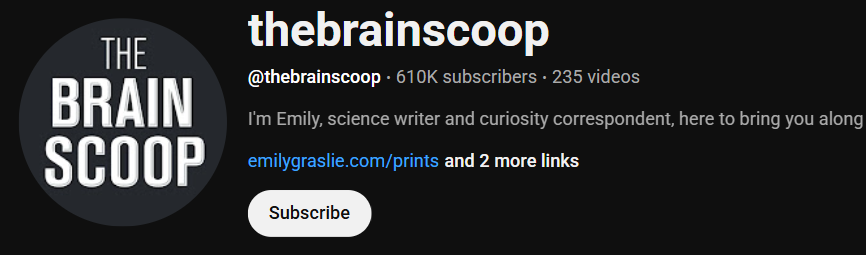
Before her digital stardom, Emily Graslie served as the Chief Curiosity Correspondent at the Field Museum and was deeply involved in science education. Originally an art major turned science communicator, she taught museum studies and science interpretation at the university level. Today, her YouTube channel ‘The Brain Scoop’ blends natural history, behind-the-scenes museum work, and relatable storytelling.
Emily’s content has shifted from traditional lectures to interactive, visually captivating explorations of biodiversity and conservation. She breaks down complex biological processes, interviews researchers in the field, and brings rare artifacts into the spotlight, all while making her audience feel like part of the discovery process. With over 500,000 subscribers, her work continues to inspire future scientists except now the classroom has no walls, and the lessons come wrapped in curiosity-driven adventures. Emily teaches that science is not just factual, it is deeply human and endlessly fascinating.
Platform: YouTube
Focus: Natural history, biodiversity, conservation, museum science communication
Dr. Henry Reich
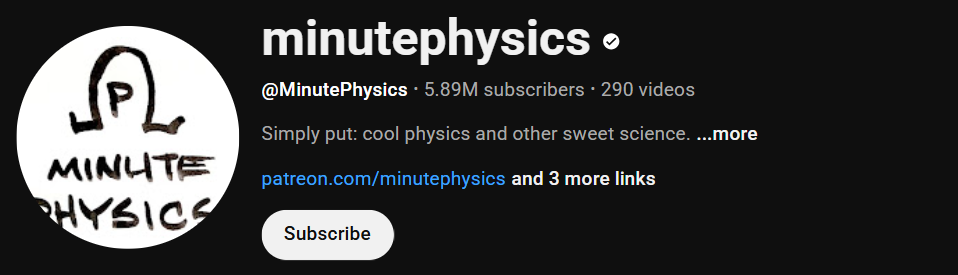
Dr. Reich was once a physics professor who thrived on the challenge of making abstract concepts accessible to students. Now, as the creator of ‘MinutePhysics’, he’s mastered the art of visual brevity, explaining everything from quantum mechanics to relativity in short, hand-drawn animated videos.
His channel has amassed millions of subscribers, proving that science education can be both concise and captivating. Each video distills a dense scientific idea into an easily digestible narrative without sacrificing accuracy. Formerly, Dr. Reich’s lessons might have been constrained by a semester schedule. Now, he can respond to trending scientific discussions, global events, or even pop culture with rapid educational responses that reach an audience far beyond his former lecture halls.
The key to his success lies in balancing rigor with wit. Whether unpacking the paradoxes of time travel or the physics of a rainbow, Dr. Reich shows that deep knowledge can thrive in the fast-paced world of digital media.
Platform: YouTube
Focus: Physics education, science explainers, animated short-form learning
Dr. Jennifer Niven
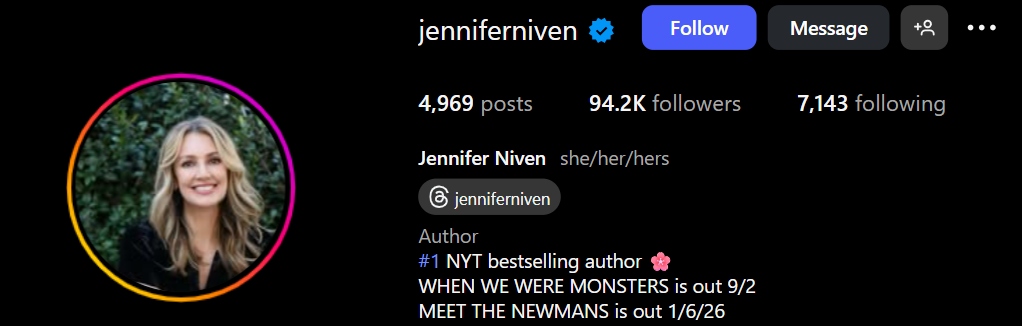
Jennifer Niven once taught creative writing at the collegiate level, guiding students through the intricacies of narrative craft. Today, she is a bestselling author and Instagram creator who uses her platform to teach storytelling to a global audience.
Her Instagram feed blends behind-the-scenes peeks at her writing process, book recommendations, and actionable writing tips. She also engages her followers through interactive challenges and prompts, making the process of honing creative skills feel communal and collaborative. Jennifer’s ability to merge her academic background with personal storytelling has created a space where aspiring writers feel seen and supported.
While her novels may sit on bestseller lists, her Instagram serves as a living classroom- one that is more accessible than any university seminar. She teaches not just how to write, but how to live as a writer, balancing craft, creativity, and the courage to share one’s voice with the world.
Platform: Instagram, TikTok
Focus: Creative writing, storytelling techniques, author mentorship
Dr. Jordan B. Peterson
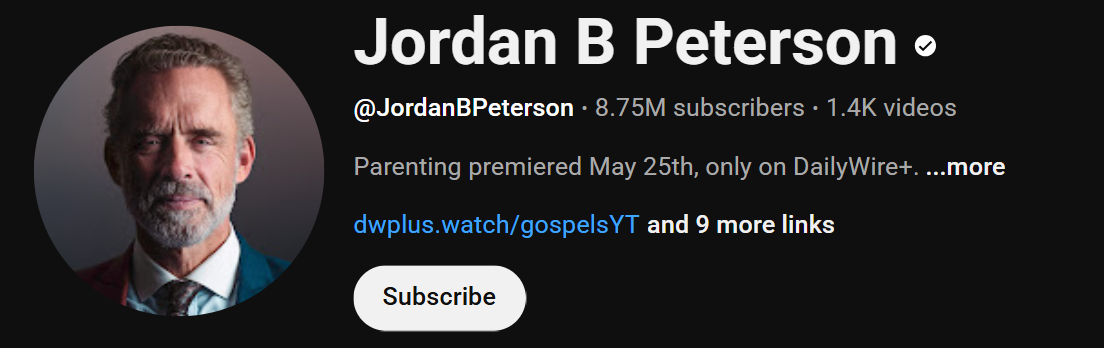
Before becoming one of the most polarizing figures in digital media, Dr. Jordan Peterson was a psychology professor known for his lectures on personality theory and cultural narratives. Today, his YouTube channel attracts millions of views on topics ranging from self-improvement to societal structures.
Peterson’s content mixes lecture-style discussions with podcast interviews, often framed around practical life advice grounded in psychological theory. His former classroom teachings on the structure of belief systems and the nature of responsibility have found new resonance with audiences who may never have stepped into a university lecture hall.
His ability to synthesize academic rigor with personal narrative has given him a unique position in the creator economy. Whether his audience agrees with him or not, his channel fosters global conversation and reflection. Peterson demonstrates how former professors can transform academic expertise into digital influence that sparks both engagement and debate.
Platform: YouTube, Instagram, Twitter/X, Thinkspot
Focus: Psychology, self-improvement, cultural and societal analysis
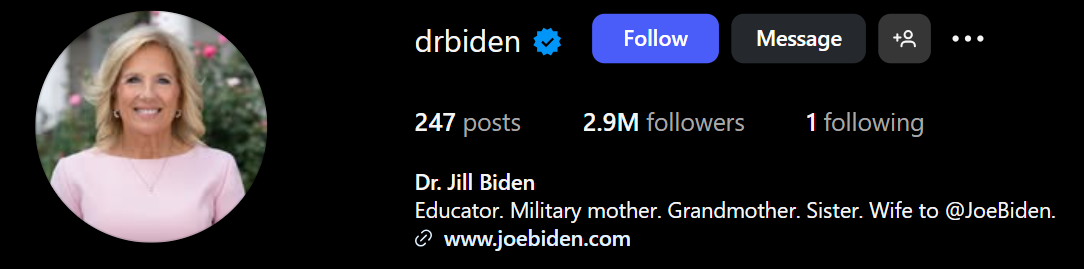
Dr. Jill Biden
Before becoming the First Lady of the United States, Dr. Jill Biden spent decades teaching English at community colleges. Even now, she maintains her identity as an educator, but her Instagram has become a hybrid of public service updates and educational advocacy.
Her posts spotlight literacy initiatives, support for teachers, and personal moments that humanize her role. Dr. Biden uses her platform to connect directly with educators and students, championing causes that reflect her lifelong commitment to learning. While she may no longer grade papers or lecture in person, her reach is exponentially larger, influencing national discussions on education.
Through her Instagram, Dr. Biden blends her academic roots with her public role, showing that a teaching ethos can extend far beyond the classroom. Her content reaffirms that education, in any form, remains a cornerstone of personal and societal growth.
Platform: Instagram, Twitter/X
Focus: Education advocacy, literacy promotion, public service engagement
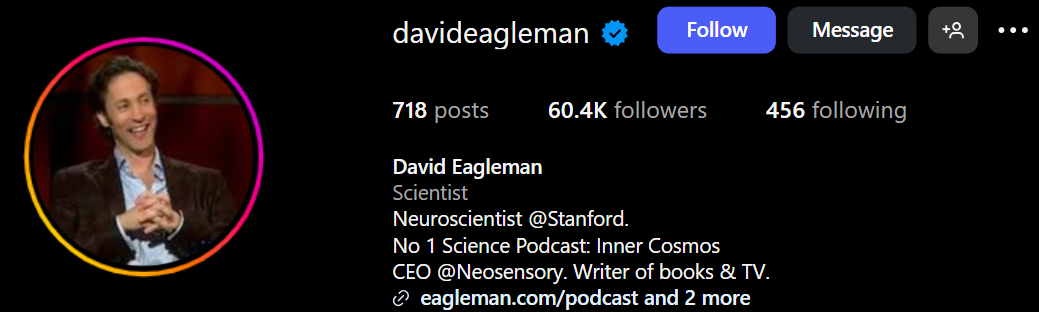
Dr. David Eagleman
Dr. David Eagleman, once a neuroscience professor at Stanford University, is now a science communicator with a focus on making the complexities of the brain understandable and awe-inspiring for the general public. His Instagram is filled with short videos, striking images, and thought-provoking captions that merge cutting-edge neuroscience with accessible analogies.
Eagleman’s shift from academia to content creation has allowed him to amplify his teaching style. Where a lecture hall might have held a few hundred students, his posts now reach hundreds of thousands worldwide. He covers topics ranging from brain plasticity to the nature of consciousness, always grounding abstract concepts in everyday experiences.
By blending visual storytelling with scientific depth, Eagleman creates a unique bridge between expert knowledge and public curiosity. His work exemplifies how professors can maintain intellectual rigor while embracing the immediacy and intimacy of social media platforms.
Platform: Instagram, Substack, Facebook, Twitter/X
Focus: Neuroscience communication, brain science, cognitive awareness
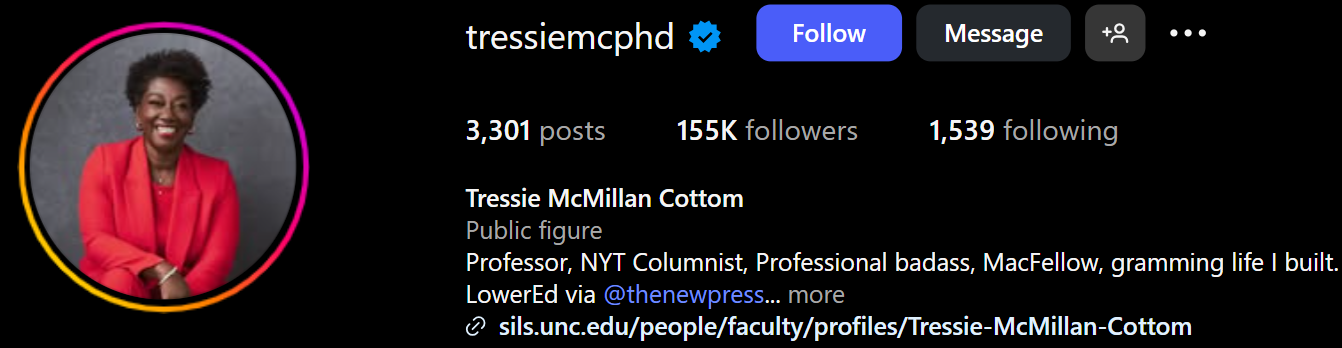
Dr. Tressie McMillan Cottom
Tressie McMillan Cottom, a former sociology professor, is now a writer, public intellectual, and active voice on Twitter/X. Her threads combine sharp social analysis with cultural commentary, tackling issues like inequality, education, and digital culture.
In the classroom, Cottom guided students through dense sociological theories and their real-world applications. On Twitter, she does the same, only in real time and for an audience numbering in the hundreds of thousands. Her ability to merge academic depth with conversational accessibility makes her one of the most influential voices in the digital space.
Cottom’s presence online has transformed the platform into an open lecture hall. She invites dialogue, challenges assumptions, and inspires critical thinking. By adapting her teaching to the pace and format of social media, she ensures that scholarly discourse remains relevant, engaging, and widely accessible.
Platform: Twitter/X, Instagram, Facebook
Focus: Sociology, inequality, cultural commentary
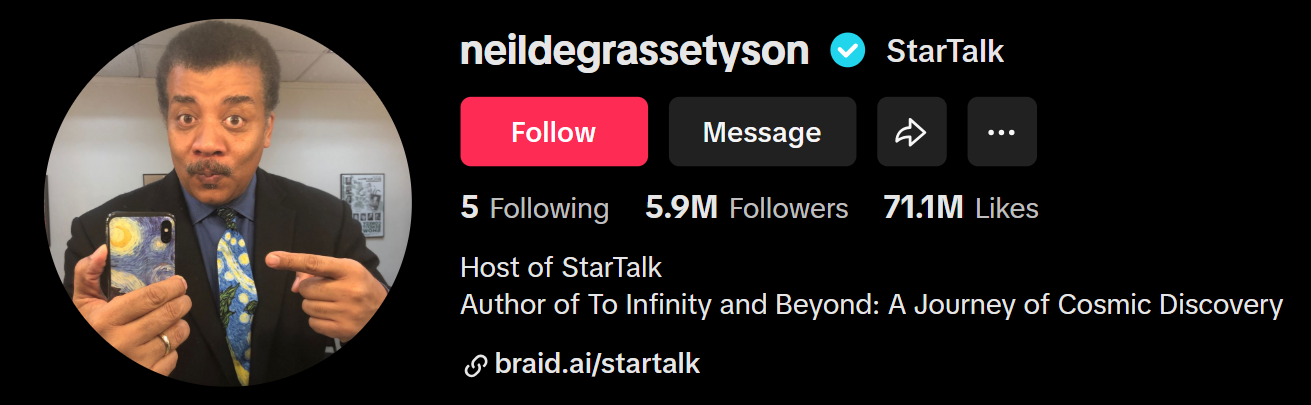
Dr. Neil deGrasse Tyson
Before becoming the most recognized astrophysicist in popular culture, Neil deGrasse Tyson was a university professor and director of the Hayden Planetarium. Today, he uses TikTok to make the wonders of the universe digestible, playful, and often humorous.
His short videos break down cosmic phenomena, answer viewer questions, and connect science to pop culture moments. While his academic lectures were rich with detail and theory, TikTok forces him to distill ideas into powerful 60-second bursts, often enhanced by visuals and animations.
This shift has expanded his audience beyond traditional science enthusiasts to include younger generations who may be encountering astrophysics for the first time. Tyson demonstrates that even the most expansive topics (like the nature of the cosmos)can be made engaging for anyone with a phone and an internet connection.
Platform: TikTok, YouTube , X (Twitter)
Focus: Astrophysics, space science, science communication for younger audiences
Dr. Michelle Wong
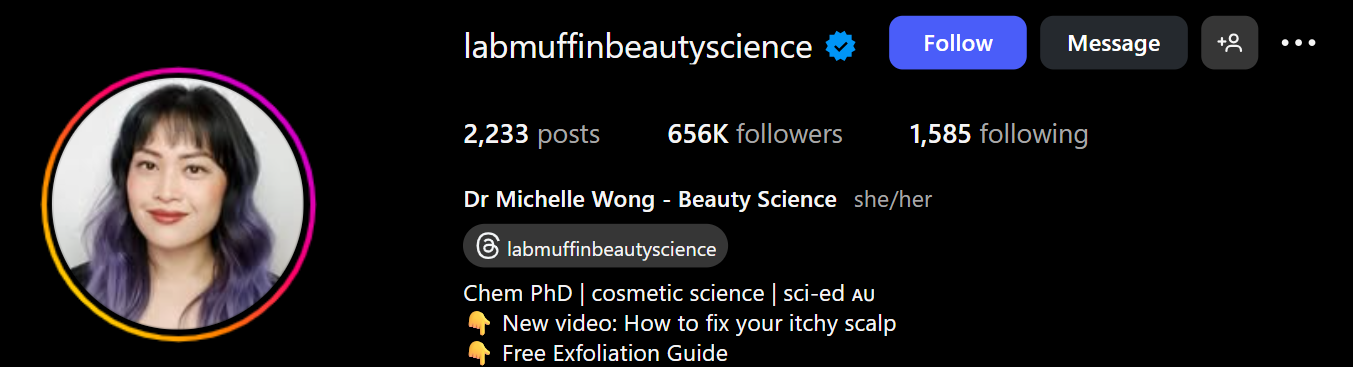
Dr. Michelle Wong is a science educator turned beauty industry truth-teller whose work blends rigorous chemistry with accessible, engaging content. Formerly a university chemistry lecturer, she transitioned into full-time content creation when she realized there was a massive gap between what cosmetic science actually says and what beauty marketing claims.
Through her platform ‘Lab Muffin Beauty Science’, Michelle dismantles myths about skincare, explains ingredient science in plain language, and empowers consumers to make informed choices about their routines. Her approachable style and evidence-based explanations have earned her the trust of both casual beauty enthusiasts and industry insiders, making her a go-to source for fact-checking viral beauty trends.
She has also collaborated with global beauty brands, always emphasizing transparency and scientific integrity in partnerships. By combining academic-level knowledge with relatable delivery, Michelle has redefined what beauty education looks like in the age of TikTok and YouTube.
Platforms: YouTube, Instagram, TikTok
Focus Areas: Cosmetic chemistry, skincare science, beauty myth-busting, ingredient education
Dr. Brian Greene
Dr. Brian Greene, once a physics professor at Columbia University, has long been known for his ability to explain string theory and cosmology to general audiences. His YouTube channel, ‘World Science Festival’ takes that skill to the next level, offering lectures, interviews, and animated explainers.
Greene’s academic career was filled with challenging concepts that demanded both precision and creativity in teaching. On YouTube, he uses those same skills to make the fabric of the universe feel tangible. He frequently collaborates with other scientists and creators, blending perspectives to keep his content dynamic and engaging.
By moving his lectures online, Greene has opened his classroom to the world. His work proves that even the most abstract scientific theories can be made relatable when presented with clarity, passion, and the right visual tools.
Dr. Brian Greene (World Science Festival) on YouTube
Platform: YouTube
Focus: Physics, string theory, cosmology
Class Dismissed
Former professors bring something to the creator economy that is often missing and that something is decades of expertise, a deep commitment to accuracy, and a genuine love for teaching. By transitioning from academia to social media, they have broken down barriers of cost, geography, and accessibility.
The result is a democratization of knowledge that reaches millions who may never have had access to their classrooms. Whether it is science, storytelling, sociology, or space, these educators-turned-creators are proof that the internet can be more than entertainment- it can be a global university, and the lecture is always in session.

.png)
.png)