Key Talking Points
- 50M milestone in Lagos turned Africa into the internet’s main stage
- Kenya stop drove record subs and global tourism searches
- Ghana citizenship moment deepened diaspora connection
- 9-hour IRL streams reshaped global perception of Africa
By early 2026, the digital world was craving something raw, unfiltered, and truly global. Enter Darren "iShowSpeed" Watkins Jr. and his ambitious "Speed Does Africa" tour. What began as a bold streaming experiment quickly evolved into a cultural phenomenon that dominated every social media algorithm.
This wasn't just a travel vlog; it was a masterclass in attention economics that challenged long-standing stereotypes and united the African diaspora in real-time.
From the streets of Lagos to the stadiums of Algiers, Speed’s journey across the continent became the biggest internet event of the year.
His ability to blend chaotic entertainment with moments of profound historical reflection allowed a global audience to see Africa through a high-definition, unedited lens, fundamentally shifting how the world engages with the continent’s modern reality.
The "Speed Effect" on Global Perception
Before 2026, much of the Western world’s digital intake regarding Africa was limited to outdated news tropes. Speed flipped the script by broadcasting modern infrastructure, vibrant city lives, and world-class hospitality to his 50 million subscribers.
Experts noted that his unfiltered, nine-hour streams did more for African tourism than decades of traditional advertising. By simply showing up and being himself, Speed forced millions of viewers to rethink everything they thought they knew about the continent, replacing "pejorative narratives" with a vibrant, modern reality.
The sheer scale of the project, covering nearly 20 countries in 28 days, provided a comprehensive and fast-paced overview of various cultures, successfully bridging the gap between a global online audience and the rich, diverse life found within the African landscape.
The 50 Million YouTube Subscriber Milestone in Lagos
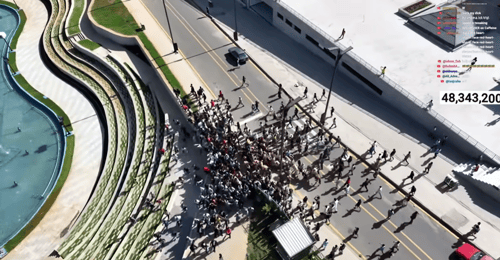
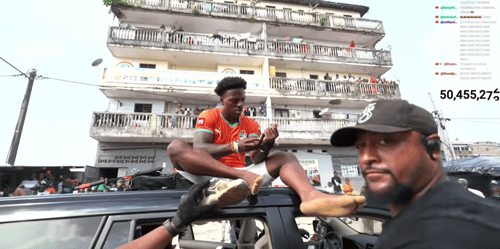
Nigeria has always been a cornerstone of internet culture, and it served as the perfect backdrop for Speed's historic 50 million subscriber milestone. Celebrating his 21st birthday simultaneously in the heart of Lagos, the stream was a high-octane celebration featuring "danfo" bus rides and the chaotic energy that only a Nigerian crowd can provide.
Around 6:00 pm on January 21, Speed halted his convoy roadside to watch his channel cross the historic mark, famously burying his face in a birthday cake in the middle of Lekki. The moment resonated globally, signaling the massive influence of the West African digital audience and cementing Speed's status as a global icon. This milestone was a shared victory, as millions of Nigerian fans celebrated their country being the stage for such a massive digital achievement.
The Algeria Stadium Incident & The "Ultras" Mentality
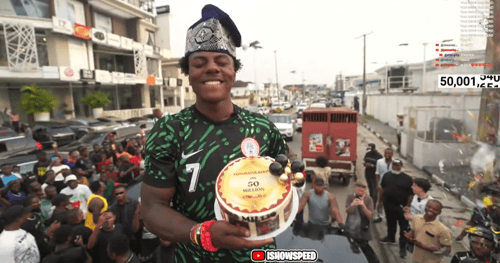
One of the tour's most controversial and viral moments occurred in January 2026 at the Nelson Mandela Stadium in Algiers during the Algerian Super Cup. While walking the pitch, Speed was met with a barrage of water bottles and paper balls thrown from the stands. The incident sparked a massive online debate regarding "Ultras" culture and privacy; local fans explained the hostility was a reaction to the intense privacy rules of the "Ultras" who refuse to be filmed.
Additionally, a cultural misunderstanding regarding a hand gesture Speed made (which was seen as disrespectful in local culture) escalated the tension. Speed handled the exit with a mix of frustration and professionalism, reminding his audience that one tense encounter should not overshadow the overwhelming love he received from the majority of Algerian citizens throughout his visit.

Kenya’s Record-Breaking Subscriber Surge
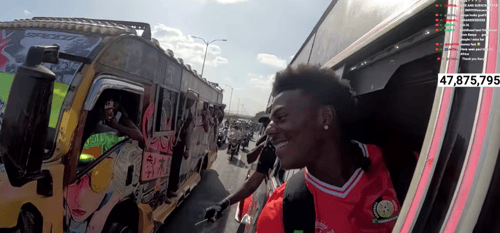
While every stop was massive, Kenya officially "broke" the internet by delivering Speed’s biggest digital growth spurt of the entire tour. In a single day in Nairobi, his channel surged by over 360,000 subscribers as he raced rally cars and leapt with Maasai warriors.
The "Nairobi Takeover" peaked at over 8.5 million concurrent viewers across platforms, and Kenyan officials credited the stream with sparking over 20 million global searches for the country's tourism sectors. The energy in Nairobi was so intense that the entire city center practically shut down, with crowds mobbing his convoy along Lang'ata Road.
This stop proved the tangible economic and promotional power of "IRL" streaming, as Kenya leading the global digital metrics became a point of immense national pride for the country’s tech-savvy youth.
Ghana: Ancestral Discovery & Official Citizenship
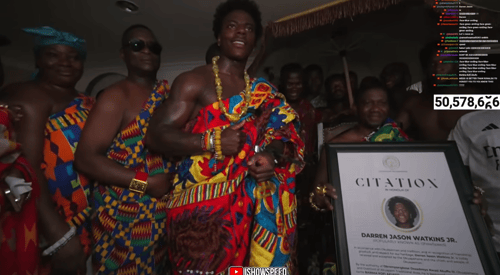
In Ghana, the tour transitioned from a spectacle into a deeply personal journey. Speed took a DNA test that traced his ancestry back to the country, leading to his emotional declaration, "I am back home, there ain't no better feeling."
This homecoming was made official on January 28, 2026, when the Ghanaian government granted him citizenship. Foreign Minister Samuel Okudzeto Ablakwa approved a Ghanaian passport for the creator, citing his "irrefutable ties" and his role as a worthy ambassador.
During a spiritual naming ceremony in Akropong, he was given the traditional name Barima Kofi Akuffo. Dressed in traditional Kente cloth, Speed participated in sacred rituals, bridging the gap between his American upbringing and his West African roots in a way that moved millions of viewers across the diaspora.
The "Mascot" Moment at the AFCON Final
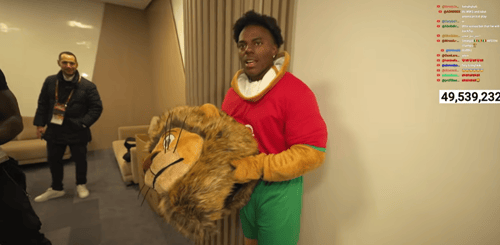
Speed proved he is the ultimate sports influencer by making a surprise appearance at the Africa Cup of Nations (AFCON) final in Morocco. Dressed as "Assad" the lion mascot, he energized the stadium and millions of viewers watching the high-stakes match between Morocco and Senegal. By inserting himself into the continent’s biggest sporting event, he bridged the gap between gaming culture and mainstream global sports.
His presence in the Morocco away kit and his antics on the pitch showcased his ability to navigate massive live-event production while maintaining his "everyman" appeal. This cross-over moment brought an entirely new demographic of viewers to African football, highlighting the continent's passion for the sport and Speed's unique ability to become the center of gravity at any major event.
Historical Reflection at Gorée Island
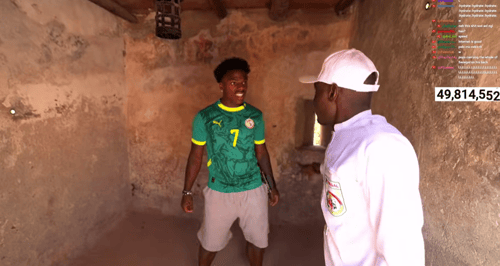
In a rare and somber moment, Speed’s visit to the House of Slaves on Gorée Island in Senegal sparked intense conversation across the Atlantic. The stream allowed millions of young viewers to witness history in real-time as he explored the site that serves as a symbol of the Atlantic slave trade. This 'moment' was praised globally for its educational value.
The shift from his typical high-energy antics to a respectful, quiet reflection proved his content had significant depth. It humanized the creator and provided a necessary historical context for his tour, emphasizing that his journey was as much about learning as it was about entertainment.
Daring Wildlife Encounters in South Africa
South Africa provided the tour’s most adrenaline-fueled clips, most notably Speed’s race against a live cheetah. While the animal gave him a quick "reminder" scratch that went instantly viral, the footage of the sprint became one of the most-shared clips of 2026. Beyond the stunts, Speed spent three days in the country (his longest stay anywhere) exploring the vibrant nightlife of Johannesburg and the scenic beauty of Cape Town.
He immersed himself in local traditions, participating in Zulu dances and war cries, and even found himself mesmerized by the Xhosa clicking language. These encounters blended extreme adventure with genuine cultural curiosity, showcasing South Africa’s unique ability to offer world-class thrills alongside deep-rooted heritage, all captured through Speed’s signature high-energy 4K lens for a global audience to witness.
The Great Jollof Rice Debate
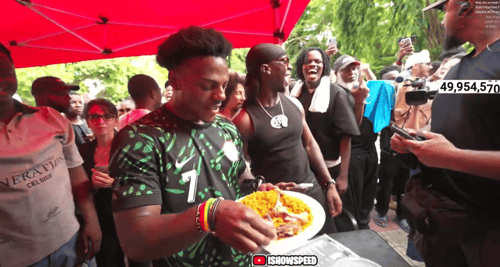
Speed waded into one of Africa’s most contested cultural battles: who makes the best Jollof rice? By tasting the dish in Nigeria, Ghana, and Senegal, he triggered a "Jollof War" in his comments section that lasted for weeks.
At Freedom Park in Lagos, he flinched at the spicy heat of his first bite, while in Ghana, he enjoyed the dish as part of his ancestral homecoming. This lighthearted but passionate debate engaged millions of users, highlighting the culinary diversity of the continent and turning a simple meal into a global trending topic.
The "war" united different nationalities in friendly competition, proving that food is a powerful universal language. Speed’s culinary exploration allowed viewers to see the nuances of West African culture through something as relatable and vibrant as a plate of rice.
The Power of "IRL" Transparency
The final reason the tour broke the internet was its sheer transparency. By streaming for up to nine hours at a time, Speed bypassed traditional media filters. Viewers saw the traffic, the bustling markets like Balogun in Lagos, the modern skyscrapers, and the rural villages exactly as they are.
This "IRL" (In Real Life) approach created a level of trust and intimacy
that pre-recorded travel shows simply cannot match. Whether he was eating raw meat in Ethiopia or pulling a car in a local strength challenge, the audience felt like they were sitting in the convoy right next to him.
This raw, unfiltered look at 20 different nations provided a sense of belonging and reality that dismantled decades of stereotypes, leaving a legacy of connection that will likely influence digital travel content for years to come
.
The Legacy of the "Speed Does Africa" Tour
iShowSpeed’s journey across Africa was more than just a successful streaming series; it was a watershed moment for digital media. By the time he wrapped up his tour in Namibia in late January 2026, he had generated over 16 million hours of watch time and fundamentally shifted how the global youth perceives the continent.
He proved that a single creator with a camera and a heartbeat can bridge the gap between continents more effectively than any corporate campaign. Whether you're a fan of his chaotic energy or his moments of sincere reflection, there is no denying that for 28 days, iShowSpeed didn't just visit Africa, he invited the entire world to experience it with him. The tour ended with a poignant visit to the Himba tribe, where Speed, now a Ghanaian citizen, promised to return to his new "home."
.png)
.png)