-
Threads vs X platform strategy
-
Meta ecosystem & Advantage+ halo effect
-
Brand safety and social platform stability
-
Long-term social media growth strategy
“Log in with Instagram.”
If you were online in July 2023, you witnessed a digital fever dream. It was the atmospheric equivalent of a high-speed land grab.
Within a mere five days, 100 million people had signed up for a platform they barely understood, driven by a volatile cocktail of curiosity, FOMO, and a growing, palpable exhaustion with the blue bird’s radical transformation under new, unpredictable leadership.
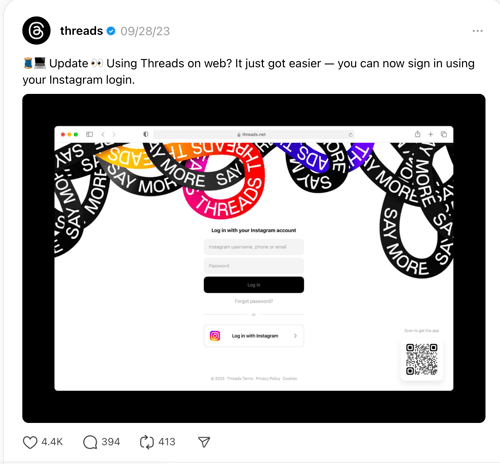
This was the birth of Threads. While the initial "hot and heavy" hype eventually cooled into what many critics labeled a "summer slump," the platform didn't just survive; it evolved. Instead of chasing the fleeting high of viral controversy, it moved into a phase of calculated, quiet growth.
The numbers in 2026 demand a second, more serious look. While the "X-odus" provided the sensational headlines, the real story for CMOs and those of us reviewing bottom lines, is the sophisticated engineering underneath.
Social media entered its data-driven era, moving from instinct to engineering not too long before the launch of the Meta app. Threads isn't just a "nice" alternative to X; it's a platform designed using Signal Intelligence, the ability to capture behavioral patterns and engineer outcomes rather than relying on luck.
Threads is the "Control Group" for Signal Engineering
For years, brands treated social as unpredictable, throwing money at creators and campaigns that often flopped despite "flawless" execution. X remains the embodiment of this chaos, high cultural heat, but also with high volatility and brand risk whereas threads was socially engineered with the help of content and audience signals.
By the start of this year, Threads had officially crossed 225 million monthly active users (MAUs). It may not have been the overnight death of X that many predicted, but it was something arguably more impressive. A masterclass in using key signal indicators to leverage a billion-user ecosystem to build a viable competitor from the ground up without ever having to "introduce" the product to a stranger.
The scale is undeniable and yet still, for brand managers and CMOs, the sentiment remains a complex mix. For every brand finding "wholesome engagement" and high-intent communities on Threads, another is whispering that it’s just a ghost town with a high headcount.
But marketers shouldn't be questioning whether Threads has users. It clearly does. The real question: Is Threads a viable long-term pillar for your brand's social strategy, or is it Meta’s defensive play to keep you inside their walled garden?
Why Threads Exists (The Meta Playbook)
To understand the trajectory of Threads, you also have to consider the cultural signal of "fatigue factor" that previously fueled the rise of X but applied specifically to the text-based "town square."
Cultural signals identify which trends are building and which moments to activate around. Consumers became tired of high-stakes, high-friction feeds. On X, the feed often feels like a perpetual battlefield of political discourse and "main character" moments. On Google, the Search Engine Results Page (SERP) is increasingly cluttered with sponsored results and AI summaries that distance the user from organic truth. That volatility created a massive vacuum for a "sanitized," lower-stress version of the public square.
Threads wasn't an accident of timing; it was socially engineered using three specific strategic levers:
- Zero-Friction Entry: By tying sign-ups directly to Instagram, Meta eliminated the "cold start" problem that kills 99% of new social apps. You didn't just join Threads; you ported your existing social identity, your verified status, and your follower graph in a single tap.
- Algorithmic De-escalation: Unlike X, which often prioritizes "freedom of speech" in a way that encourages conflict-heavy engagement, the Threads algorithm was engineered to prioritize "positive affinity." It’s designed to be the "nice" neighborhood on the internet.
- The Instagram "Halo" Effect: Much like the TikTok "spillover" that brands now rely on to drive secondary sales on Amazon, Meta created an ecosystem where Threads posts are cross-promoted directly into Instagram Reels and Feeds, ensuring that even if you don't open the app, you see the content.

Think of Threads as the monetization and stability layer on top of Meta’s visual empire.
The Retention–Reach Paradox
Let’s dive into the data. Threads has the reach, but does it have the stickiness required for a brand to invest six figures in a dedicated team?
Initially, the "Time Spent" metric for Threads was lackluster. Users would log in, realize the real-time "news" wasn't as fast as X, and bounce. However, data from H1 2025 through early 2026 shows that daily time spent has stabilized and begun a steady climb. This is happening even as X faces continued fluctuations in advertiser sentiment and platform stability.
The Platform Comparison: 2026 Benchmarks
|
Metric |
X (Formerly Twitter) |
Threads |
|
Primary Driver |
Real-time news & High-stakes controversy |
Community & "Friendly" long-form discourse |
|
Brand Safety |
High Risk / Adjacency Volatility |
Low Risk / Algorithmically Controlled |
|
Ad Infrastructure |
Mature but facing retention issues |
Integrated with Meta Advantage+ |
|
User Base |
550M+ MAU (Stagnating) |
225M+ MAU (Steady Growth) |
The paradox here is that while X still holds the "cultural heat" for breaking news, Threads has the infrastructure.
For a brand, the "TikTok made me buy it" impulse (driven by visual dopamine) is hard to replicate in a text-first format. This is a great example of using audience signals for predictive targeting and the Meta Halo Effect allows for seamless retargeting.
A user’s interaction on a Thread can now trigger an Advantage+ ad on Facebook or Instagram within minutes. This isn't just a new app; it's a new, high-intent data stream for the world's most powerful advertising engine.
The Engineering of Brand Safety
If the early days of social media were about "moving fast and breaking things," the current era is about moving safely and using predicitons to scale.
X's transition to an "absolute speech" platform has made many legacy brands incredibly nervous. When TikTok Shop launched, the referral fee was the primary hurdle. On X, the hurdle is adjacency risk; that is, the fear that a brand’s high-budget ad for luxury skincare will appear directly beneath a fringe political manifesto or a graphic video.

Threads was socially engineered to be the "Anti-X" in this regard. Meta has doubled down on three pillars to protect the margin:
- Keyword Sensitivity: Aggressive, AI-driven tools that allow brands to keep the "vibe" of their comments section curated and brand-safe without manual moderation.
- The "No News" Bias: Meta has been explicit… the algorithm will not "boost" hard news or politics in the way X does. This effectively filters out the most volatile content types that drive advertisers away.
- Institutional Moderation: Leveraging Meta’s massive, existing oversight framework to handle disputes, giving brands a "predictable" environment for their spend.
For operators who thrive in the "chaos" of TikTok, X might offer higher potential for explosive, accidental virality. But for a Fortune 500 brand looking for a predictable margin of safety, Threads is the only logical text-based option.
“In the current social landscape, volatility is a bug for brands, but a feature for users,” says one prominent CMO. “Threads is effectively turning stability into its primary product.”
The Economics of the "Long Haul"
If the launch of Threads felt like a land grab, the current phase is about Economic Integration.
Threads doesn't require a standalone ad platform for most marketers. Instead, it has been folded into the Meta Advantage+ ecosystem. This is social engineering at its most profitable. Meta isn't asking you to buy "Threads Ads"; they are asking you to buy "Meta Reach," and their black-box algorithm decides if that reach is best served as a Reel, a Story, or a Thread.
The Fediverse Gambit: Engineering Permanence
Perhaps the most significant "long haul" move in the engineering of Threads is its integration with ActivityPub. By joining the "Fediverse," Meta is engineering a future where your followers aren't trapped on one app.
This sounds counter-intuitive for a "walled garden" like Meta, but it’s a brilliant hedge against platform decay. If Threads ever becomes "uncool," the protocol ensures that data and connections remain portable. This reduces the "platform risk" for creators and brands, encouraging them to invest their time and content into the ecosystem because it’s no longer a "winner-take-all" silo. It is a play for permanent relevance rather than temporary dominance.
The Incrementality Question
The million-dollar question for digital operators in 2026 is this: Are Threads sales and engagements "net-new," or just a shift from your existing Instagram and Facebook budgets?
Recent attribution data from platforms like Fospha and Triple Whale suggest a 65-70% overlap between active Threads users and Instagram power users. This implies that Threads isn't necessarily expanding the "total pie" of the internet; it’s deepening the slice of the user's attention.
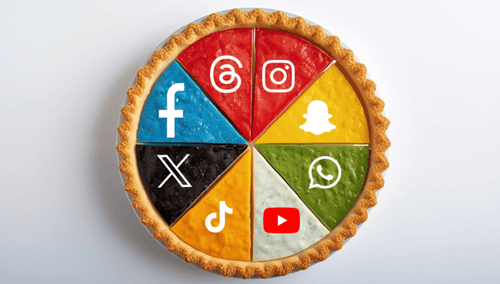
However, the Attribution Effect is real. Much like how TikTok often drives 788% more conversions than last-click attribution models show, Threads acts as a critical "nurture" layer in the middle of the funnel. A user might see a brand's witty, unpolished, and human reply on Threads, forget about it in the moment, and then convert three days later after seeing a high-production Instagram ad.
If you are only looking at click-based data within the Threads app, you will chronically underestimate its impact. You have to measure Profit Per Session (PPS) across the entire Meta suite to see the "Halo Effect" in action.
Scaling in the Calm: The Creator Flywheel
Getting onto Threads is easy. Scaling is where the "margin trap" lies.
X is built for the "sprint", the viral moment, the breaking news cycle that lasts for six hours. Threads is engineered for the marathon. Meta’s strategy is simple: outlast the volatility of its competitors. By providing a "soft landing" for those who want to leave the chaos of X behind, they are building a high-intent, lower-stress audience that is actually more receptive to brand messaging.
The "Threads Playbook" for 2026
To scale effectively, brands are experimenting with "Text-First Flywheels" that protect margins while driving engagement:
- The "Unpolished" Voice: Much like the scrappy, lo-fi videos that work for Oreo on TikTok, Threads favors "human" text. Brands that scale here have ditched the corporate PR speak in favor of W-2 creators who act as the "face" (or voice) of the account.
- Community-Led R&D: Successful operators use Threads as a feedback loop. They ask questions, run polls, and gather qualitative data that feeds their actual product development. This turns a social platform into a low-cost research center.
- The 6-Month Commitment: TikTok punishes half-hearted testing, and Threads is the same. The algorithm needs a 3-to-6 month window to "map" your brand into the right interest clusters. Brands that cut their budget after two weeks of low likes are missing the engineering at work.
For some brands like Obvi or Betterbrand, scaling has meant building a creator flywheel. On Threads, this looks like a Discord or Slack hub where brand advocates swap "hooks" and "conversation starters." The goal is to move the engine from organic posting to a "Spark Ad" model where winning Threads are boosted to drive mass sentiment.
So… Is Threads Worth It?
The answer: Yes! But moreso as a defensive and reputational pillar, not a direct response engine.
X’s success was "hot and heavy" because it was built on the friction and heat of the moment. Threads is being engineered for the long haul because it is built on the stability of the Meta ecosystem and the promise of open social standards through the Fediverse.

Threads is not a "free lunch" for engagement. It requires a specific, nuanced tone; one that is helpful, witty, and decidedly "not toxic." For the right brand, with a focus on long-term brand equity and "nurturing" the funnel, Threads is the most sophisticated piece of social engineering available in 2026.
It might not be as "loud" as X, but in the world of social media performance, the loudest room isn't always the one where the most business gets done. It’s often the quiet, engineered conversation in the corner that drives the highest lifetime value.
Before you pivot your 2026 budget, ask yourself these three critical questions:
- Does your brand have a "voice" that works in text? If you rely solely on high-gloss visuals and can't maintain a human conversation in the comments, Threads will feel like a chore.
- Are you looking for Brand Safety over Raw Reach? If your priority is absolute reach at any cost, X or TikTok might still be your primary bets. If you need a "clean" environment for your C-suite, Threads is the move.
- Is your team prepared for the Marathon? Success on Threads is measured in sentiment, long-term "lift," and cross-platform retargeting efficiency. If you need a "viral hit" by Friday, look elsewhere.
.jpg)