

- Affiliate tools are now social media disruptors.
- Commerce-first DNA is optimal for superior customer discovery.
- New platforms are delivering up to 4x stronger ROI over traditional platforms.

For years, brands have poured billions into Instagram, TikTok, and YouTube, assuming those platforms were the center of gravity for influence. But while everyone was watching legacy social, something unexpected was happening in the margins.
Affiliate platforms like LTK and ShopMy, once seen as back-end utilities, are transforming into front-line media channels. They’re not just tracking sales anymore — they’re building communities, layering on entertainment, and reshaping how consumers discover and buy.
For CMOs, the question isn’t whether these commerce-native platforms will matter. It’s how quickly they’ll rewrite the rules of influencer marketing and challenge the dominance of the channels you’re still betting on.
In 2025, affiliate platforms are reinventing themselves as full-fledged social ecosystems.
In an interview with Modern Retail, the co-founder and president of LTK, Amber Venz Box, said this: “LTK is very much social in 2025. We will continue to make meaningful investments in being a place where real humans can connect with each other.”
They’re layering on feeds, entertainment features, and community tools designed to keep audiences engaged natively. For marketers, this shift isn’t just a tactical change in influencer workflows, but an emergence of an entirely new competitive arena for consumer attention.
Originally, affiliate platforms were built for performance marketing. The model was simple: connect a product link to a sale and track attribution. Their value was in their precision, not their personality.
But as creators and consumers demanded richer experiences, LTK and ShopMy began to expand. Today, they offer creator profiles, social feeds, and curated discovery features that resemble a blend of Instagram and Amazon. LTK reports more than 30 million monthly active users globally, 650,000+ creators, and $4 billion in annual retail sales driven by creators.
This evolution is about more than convenience.
By shifting from transactional utilities to consumer destinations, commerce-native platforms are setting the stage to become the next wave of social-first media channels.
While traditional social platforms have raced to add shopping tools, their DNA has always been content-first. Commerce comes as an add-on, not a foundation. Commerce-native platforms flip that equation.
LTK is expanding its features to include video shopping and entertainment-driven discovery. ShopMy has leveraged micro-influencer communities, where tighter connections can lead to increased trust and higher conversion rates. Micro-influencers deliver 60% higher engagement and up to 3x stronger conversion rates compared to macro-creators.
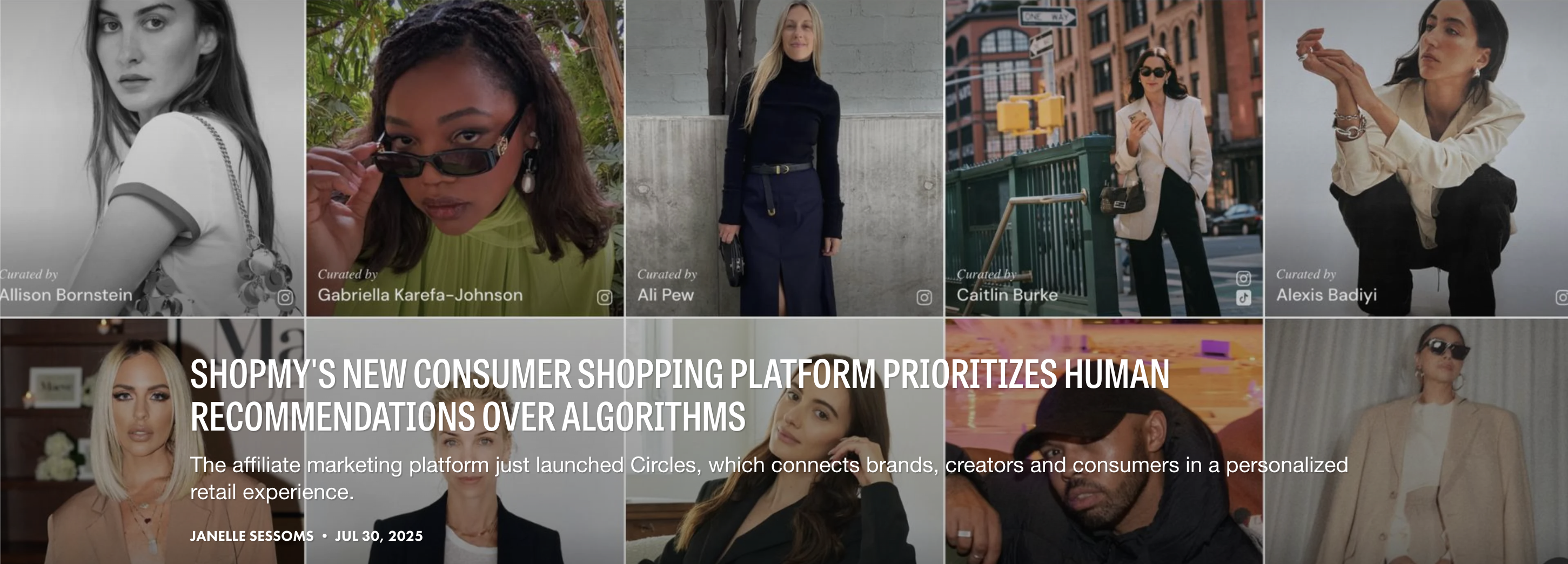
For consumers, the experience feels different from scrolling through Instagram or TikTok.
These platforms aren’t built around passive content consumption, but rather, they’re built around active product discovery. The intent is higher, the communities feel closer, and the path from interest to purchase is dramatically shorter.
A New Model For Influencer Partnerships
The old playbook was straightforward: brands partnered with influencers on Instagram or TikTok, and affiliate links functioned as a secondary revenue stream. In commerce-native ecosystems, that relationship is being rewritten.
Creators are no longer just placing links; they’re building entire commerce-driven content hubs. Within these ecosystems, influencers can showcase products, create editorial-style recommendations, and foster communities that drive both engagement and purchase.
For brands, the opportunity lies in embedding directly into these ecosystems. Instead of renting reach on legacy platforms, marketers can integrate with creators in environments purpose-built for discovery and conversion. Campaigns on LTK, for instance, are reporting 2–4x stronger ROI compared to traditional affiliate programs, while ShopMy creators have driven average order values 20–30% higher than legacy social links.
Historically, discovery was fragmented: see a product on Instagram, click a link, research elsewhere, then purchase. Commerce-native platforms collapse that journey.
Now, awareness, consideration, and conversion can all happen in a single flow. Consumers can browse creator content, discover a new product, and check out seamlessly within minutes. Seventy-four percent of consumers now rely on social platforms for purchase decisions, and 84% of Gen Z say influencer recommendations directly impact what they buy.
This blending of marketplace and media channel changes the calculus for CMOs. These platforms are not just about driving sales; they’re shaping the first touchpoints where consumers encounter brands.
Instagram, TikTok, and YouTube still dominate the influencer economy, but their commerce layers remain clunky. Instagram checkout adoption, for example, remains below 20% of users, and TikTok’s shop — though growing rapidly — generated $15 billion in GMV in 2023, far behind Amazon’s dominance.
Commerce-native platforms present a structural challenge.
Their DNA is transactional, and now they’re adding the stickiness of social features. The model feels familiar: just as Amazon evolved from an online bookstore into a billion-dollar business, LTK and ShopMy are poised to grow from affiliate utilities into full-fledged media ecosystems.
This isn’t a space to watch passively. The platforms are already reshaping discovery and purchase behavior, and the brands that hesitate risk falling behind. Here’s how senior marketing leaders should respond:
The mandate is clear: act now, experiment aggressively, and build fluency in commerce-native ecosystems before your competitors do.
The convergence of commerce, content, and community isn’t slowing down. If anything, more platforms will adopt this hybrid model, and consumer attention will continue to fragment across these new ecosystems.
The implication is clear: brands that cling exclusively to legacy social risk losing both visibility and relevance. Meanwhile, those that embrace commerce-native platforms early will not only drive sales but also position themselves at the front edge of consumer discovery.
For CMOs, the mandate is simple: experiment boldly, learn quickly, and prepare for a future where the lines between shopping and social are no longer visible.

.png?width=300&height=300&name=July%20lists%20and%20blogs%20(1).png)

.png?width=300&height=300&name=May%20lists%20and%20blogs%20(19).png)