


Every four years, when a favourite world cup comes around some of us become different people. The phone starts ringing more, muted group chats suddenly feel urgent, and we may find ourselves arguing about lineups like we've been watching every match all season.
It’s FIFA World Cup season again, and certain matches manage to pull even us non-diehard football fans into the frenzy.
This time, though, the frenzy didn’t start with a particular match. It started with a table, four players, and a pile of toy bricks.
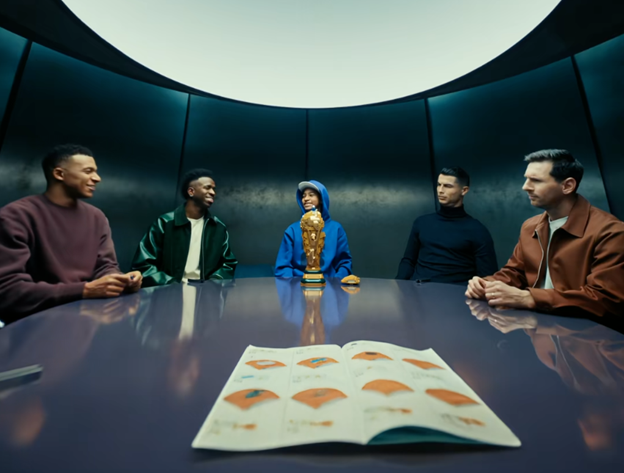
Because when LEGO and FIFA dropped their now-viral ad featuring Cristiano Ronaldo, Lionel Messi, Kylian Mbappé, and Vinícius Júnior sitting around a round table, building the World Cup trophy out of LEGO, something clicked.
This video went totally viral with over 21 million views in less than two weeks because of the star power of these players, but something else was also at play. The video also trended because of what the story does.
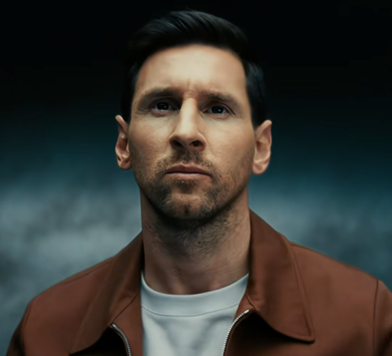
The moment Messi is revealed in the LEGO-FIFA Ad on TikTok
They build together, but they also compete. Each player subtly pushes their own LEGO figurine forward, trying to claim the very top of the trophy. There’s no dialogue, no dramatic confrontation, just quiet tension playing out through movement and placement. Then, just as it feels like one of them will win, a young, anonymous boy steps in and places his own figurine at the top.
And just like that, the entire narrative shifts.
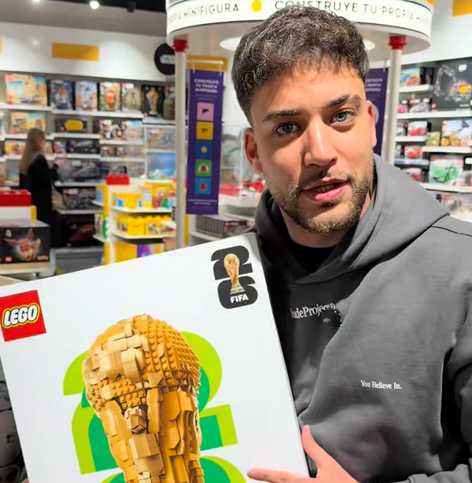
Creator @javibridgee3 takes us along to buy the LEGO-FIFA World Cup Set
The moment it stopped being about them
The first time I saw the video, it wasn’t on TV or YouTube. It was on TikTok, already clipped, reposted, and circulating faster than I could keep up.
Four of the biggest names in football, reduced to LEGO mini-figures, leaning over a table like kids, carefully stacking pieces, each trying to outmaneuver the other without ever saying a word.
It felt playful, but also familiar. Not in a football sense, but in a human one. The quiet competition, the small acts of one-upmanship, the unspoken agreement that someone has to win.
Then the boy steps in, and suddenly, winning doesn’t look the same anymore. It was then that I realized the power of the commercial. The ad was being watched but it was also actually being interpreted.
This was about access and not only about greatness
Most World Cup campaigns are built around elevation. They remind us of who the greatest players are, who deserves the spotlight, who sits at the top of the game.
This did something quieter, and far more interesting; it lowered the barrier.
By turning Cristiano Ronaldo, Lionel Messi, Kylian Mbappé, and Vinícius Júnior into LEGO figures, it made them playable. Not distant icons, not untouchable legends, but characters in a scenario that anyone could imagine themselves in.
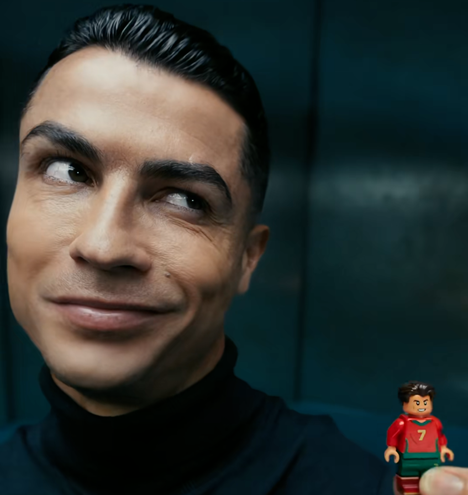
Ronaldo prepares his LEGO figure to take the LEGO-FIFA World Cup top spot
And the ending reinforces that idea without over-explaining it. The boy doesn’t interrupt them dramatically. He doesn’t earn the moment through some visible journey. He simply takes part. That’s the shift. This isn’t about watching greatness anymore. It’s about placing yourself alongside it.
The obsession with distance
For years, sports marketing has relied on distance. The bigger the athlete, the more elevated they appear, the more removed they feel from everyday life.
That model worked when access was limited. It doesn’t hold the same weight now.
Because audiences, especially younger ones, aren’t looking for distance. They’re looking for proximity. They want to feel like they’re part of the moment, not just observing it.
This campaign quietly challenges that.
Instead of putting these players on a pedestal, it brings them down to a table. It gives them a shared task. It allows small moments of competition instead of grand displays of dominance.
And then it hands the final move to someone outside of that circle.
That’s not a loss of prestige, it’s a redistribution of attention.
The table as a stage
There’s something deceptively simple about the setup. No stadium, no crowd, no dramatic lighting, just a round table and a shared build.
But that simplicity is doing the work.
It strips away spectacle and replaces it with interaction. Instead of only watching a performance, you’re actually watching a moment that feels familiar. Four people building something together, quietly competing over who gets the final say.
That’s a scenario almost anyone recognizes.
And that familiarity makes the ending land harder, because it doesn’t feel staged. It feels like an authentic and possible scenario.
The internet did what it always does
Within hours, the ad wasn’t just the ad anymore. It turned into reaction videos, conversations, interpretations, and rewatches.
Creators such as Matty FC ( @mattyfc_ _) speculated about the potential cost to bring these stars together, others wondered what the ending meant. Some saw it as a message about the next generation. Others framed it as fans reclaiming their place in the sport. Some just appreciated the simplicity of it, the idea that even the biggest stars can be part of something shared.
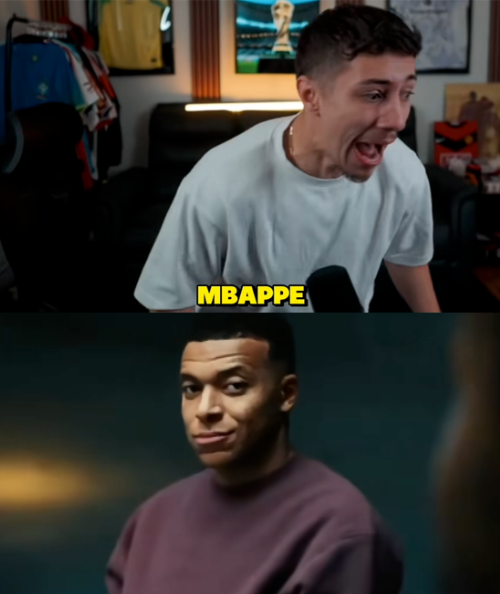
Matty FC reacts with excitement to LEGO's Epic World Cup Ad on TikTok
That range of interpretation is exactly what gives it staying power.
It doesn’t close the story. It leaves it open.
And open stories travel further.
The data points to why this works
A 2024 report from Deloitte found that 60 percent of Gen Z prefer user-generated content, a signal that audiences increasingly gravitate toward content they can engage with, remix, or make their own. That preference shows up clearly here.
This isn’t one of those campaigns that tells you what to think. It gives you a moment and lets you decide what it means. It invites replay, discussion, and sharing, not just viewing.
That’s the difference between content that performs and content that sticks.
Why LEGO made this possible
Sure, LEGO is known for selling products, but it also operates in the space of imagination. Its entire identity is built around the idea that anyone can create, build, and reshape a story .
So, when it steps into football, it doesn’t feel like a brand borrowing culture. It feels like a brand extending it.
The idea of building the World Cup trophy out of LEGO is both creative and aligned. And once you introduce recognizable figures into that build, the story almost writes itself.
The quiet power of that final moment
The boy placing his figurine at the top could have been overdone. It could have been framed as a victory, or turned into a heavy-handed message.
It wasn’t.
There’s no celebration, no dramatic pause, no explanation. Just a simple action that changes how you see everything that came before it.
It doesn’t take anything away from the players. It just expands the frame.
They’re still great. They’re still central. But they’re no longer the only ones who matter.
So why did it actually break the internet?
Not because of the players, even though Cristiano Ronaldo, Lionel Messi, Kylian Mbappé, and Vinícius Júnior carry cultural weight. Not because of the brands, even though LEGO and FIFA know exactly how to command attention.
It broke the internet because it gave people a story they could step into, then immediately gave them something to question.
The ad placed the biggest names in football in a setting that felt intimate, almost disarmingly simple, a round table, a shared build, a quiet rivalry playing out through tiny figurines. Then it flipped the script, letting an anonymous kid reshape the outcome. That alone would have been enough to spark conversation.
But the real acceleration came after.
The controversy: was it ever real?
As soon as the “behind-the-scenes” clips started circulating, the tone online shifted. What began as admiration quickly turned into scrutiny. Fans started noticing small inconsistencies, lighting that didn’t quite match, eyelines that felt slightly off, movements that looked just a little too clean.
The assumption followed almost immediately. These players were not in the same room.
The idea that Cristiano Ronaldo, Lionel Messi, Kylian Mbappé, and Vinícius Júnior were filmed separately and stitched together using CGI or advanced AI techniques started to feel plausible, but also, very likely. And that’s where things got messy.
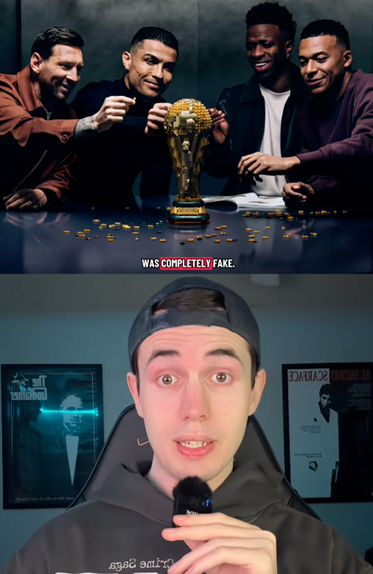
Brandon Conner breaks down why people are upset about the ad on TikTok
Some TikTok comment sections stopped celebrating the moment and started debating it. Some viewers felt misled, arguing that the magic of seeing these players together was diminished if it wasn’t physically real. Others didn’t care at all, pointing out that the LEGO versions, the storytelling, and the ending were the real focus anyway.
Creators like Brandon Conner leaned into the skepticism, breaking down the different negative reactions that had started to pour in after alleged behind-the-scenes videos came out. And just like that, the campaign had a new layer… a controversy.
Final thought
I’ll probably go back to casually checking scores once the tournament ends. I always do.
But this year, what will stick probably won’t be the matches, but rather, the memory of the feelings and excitement that came with watching, rewatching and analyzing how LEGO and FIFA turned something as massive as the FIFA World Cup into something small enough to hold in your hands.
Because that’s what really landed. Not only the players, not even the story, but the nostalgia of it all. The quiet reminder of what it felt like to build something as a kid, to imagine yourself in the middle of it, to believe, even briefly, that you belonged there.
Watching Cristiano Ronaldo, Lionel Messi, Kylian Mbappé, and Vinícius Júnior reduced to LEGO figures made them and the moment feel closer and actually familiar. And maybe that’s why people couldn’t stop sharing it.
Because for 60 seconds, it felt like we were back on the floor, pieces scattered, building our own version of it, deciding who wins, and quietly placing ourselves somewhere in the story as opposed to feeling like we were simply watching the game and it’s brightest stars from the outside.

.png?width=300&height=300&name=July%20lists%20and%20blogs%20(1).png)

.png?width=300&height=300&name=May%20lists%20and%20blogs%20(19).png)