- Trendjacking is high-risk, high-reward for brand visibility
- Timing, fit, and audience alignment determine success
- Tone-deaf moments damage trust faster than trends build it
- Winning brands co-create with creators, not chase trends
Trendjacking is catnip for marketers.
One minute you’re watching a fun TikTok trend. The next, your Slack’s on fire with “let’s do this!” messages.
But for every trend that hits, there’s another that makes everyone want to throw their phone in the ocean. Ahem… I’m talking about you, fake apologies. Barf!
Trendjacking can make a brand look brilliantly in tune with culture, or painfully out of touch. It’s a fine line every marketer tries to walk. Which raises the question: does trendjacking actually help brands bring in new customers, or is it mostly a play for short-term attention?
This article will cover when trendjacking works and when it backfires, the key do’s and don’ts to keep your brand out of the cringe zone, and real examples that show how to hop on trends in the right ways.
Why brands trendjack
Every marketing team wants attention. And one of the fastest ways to get it? Go where the popular kids are.
Stats show us exactly where the popular crowd hangs out and just how much they influence others:
- Nearly half of U.S. teens say they’re online constantly, with 90% using YouTube.
- 65% of respondents (from a Trendjacking Strategies by Influencers research study) found that they are active on social media.
- 65% said they interact with influencers daily.
- 65% (wow, magic number) said influencers frequently use current trends in promotions.
- 40% have purchased a product after an influencer promoted it.
For brands, that’s a flashing neon sign pointing straight toward social media. Attention and influence live there. And every viral sound, trending meme, or fast-moving format is a potential express lane to reach new audiences.
When a brand taps into a conversation already dominating feeds, it skips one of the hardest parts of marketing (earning initial awareness). It rides an existing wave of curiosity and emotion.
That’s why even established brands with massive budgets are willing to play in meme culture and short-form video.
Of course, attention alone doesn’t guarantee loyalty or sales. But it does open the door. As creator economy expert and influencer marketing consultant Lindsey Gamble notes, trendjacking can “help set the stage for acquisition, especially when it comes to getting in front of new audiences or re-engaging customers who need a reminder that you’re still here.”
Done right, it’s a visibility play that can warm up audiences long before the next campaign or product drop ever hits their feed.
When trendjacking works
It makes sense why marketing teams are hyped on trendjacking. When it works, it really works.
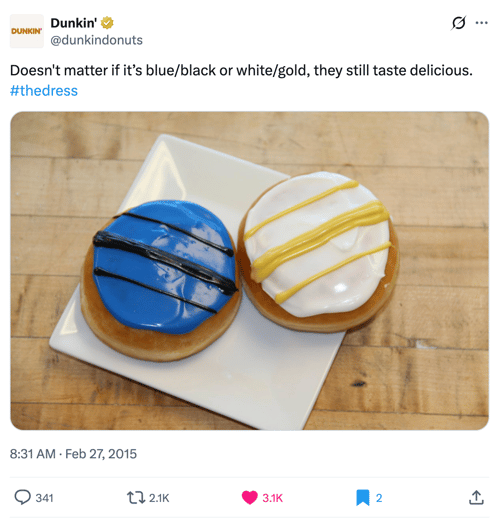
Just as Dunkin’. When the internet exploded over “The Dress” debate in 2015 (I still see white and gold), Dunkin’ didn’t miss a beat.
They posted two donuts decorated in each color scheme with the caption: “Doesn’t matter if it’s blue/black or white/gold, they still taste delicious.” It was quick, funny, and perfectly on-brand. It was a lighthearted way to join a cultural frenzy without forcing relevance.
Then there’s Duolingo, the unofficial king of TikTok trendjacking. The brand jumps on trending audios and memes almost instantly, from NPC livestream jokes to the “Roman Empire” obsession, all starring its chaotic green owl mascot. It’s self-aware, native to the platform, and proof that personality + timing = viral gold.
While trendjacking can be rewarding, you have to do it right. As Lindsey Gamble explains, a few conditions need to be true for it to work, including:
- Timing. This is huge. Brands need to act quickly. Trends come and go fast. A brand might have the perfect way to jump in, but if it’s after the trend has fizzled, it’s not going to land.
- Fit. Not every brand fits every trend. Think about your voice, values, positioning, and the type of content you already share. Jumping on something that’s disconnected (or worse, contradictory) can feel forced and backfire.
- Audience. Are your customers even paying attention to this trend? Will it resonate? If not, that’s your sign to sit it out.
When those three boxes are checked, trendjacking works.
When trendjacking flops
Then there are the times when trendjacking faceplants. You know, when the “cool marketer” suddenly has to issue a real apology letter. (Not the Notes-app kind. The legal-team-approved kind.)
You probably have your own examples of when a brand missed the mark. Here are some famous examples to jog your memory:
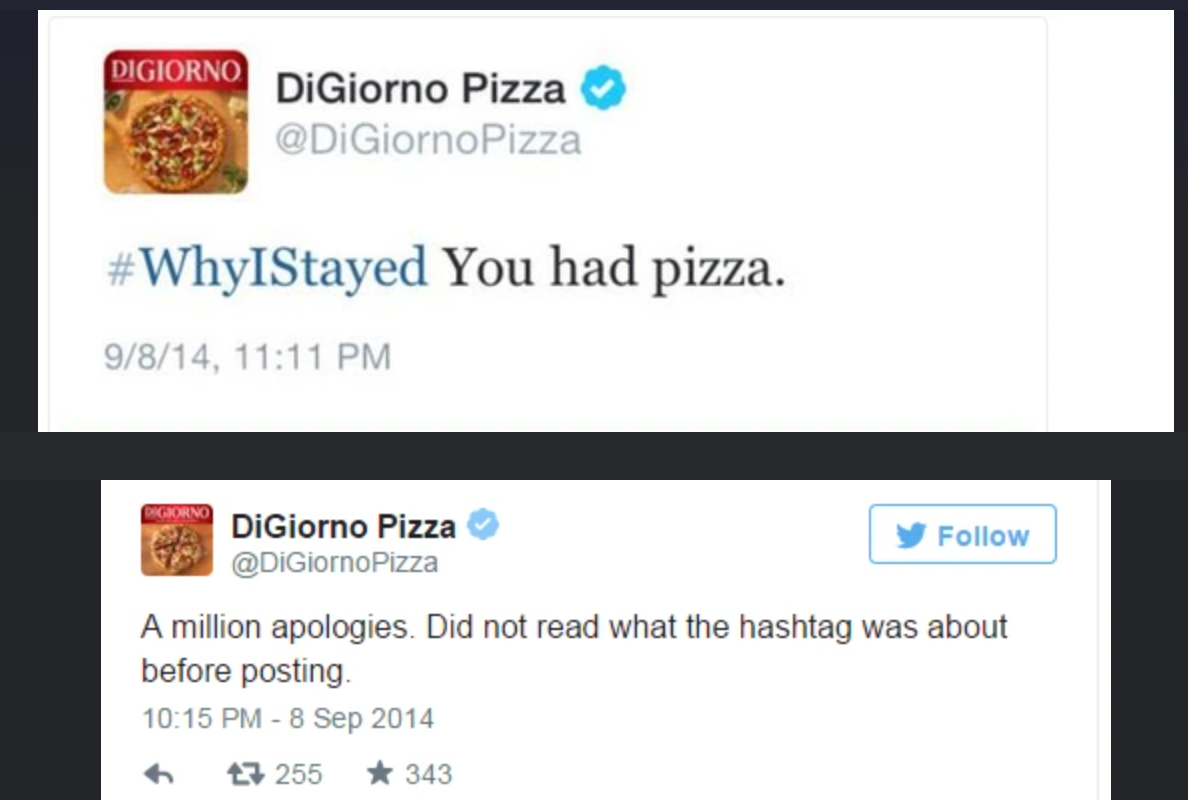
DiGiorno Pizza thought it was being cheeky when it joined the hashtag #WhyIStayed with the tweet “You had pizza.” The problem was that the hashtag was for survivors of domestic violence sharing their stories. The tweet was deleted within minutes, but not before screenshots spread everywhere.
Pepsi also messed up. The brand tried to capture the spirit of social activism by having Kendall Jenner hand a police officer a can of soda to “solve” a protest. But it didn’t unify anyone. Instead, it trivialized real-world issues and became an instant case study in how not to read the room.
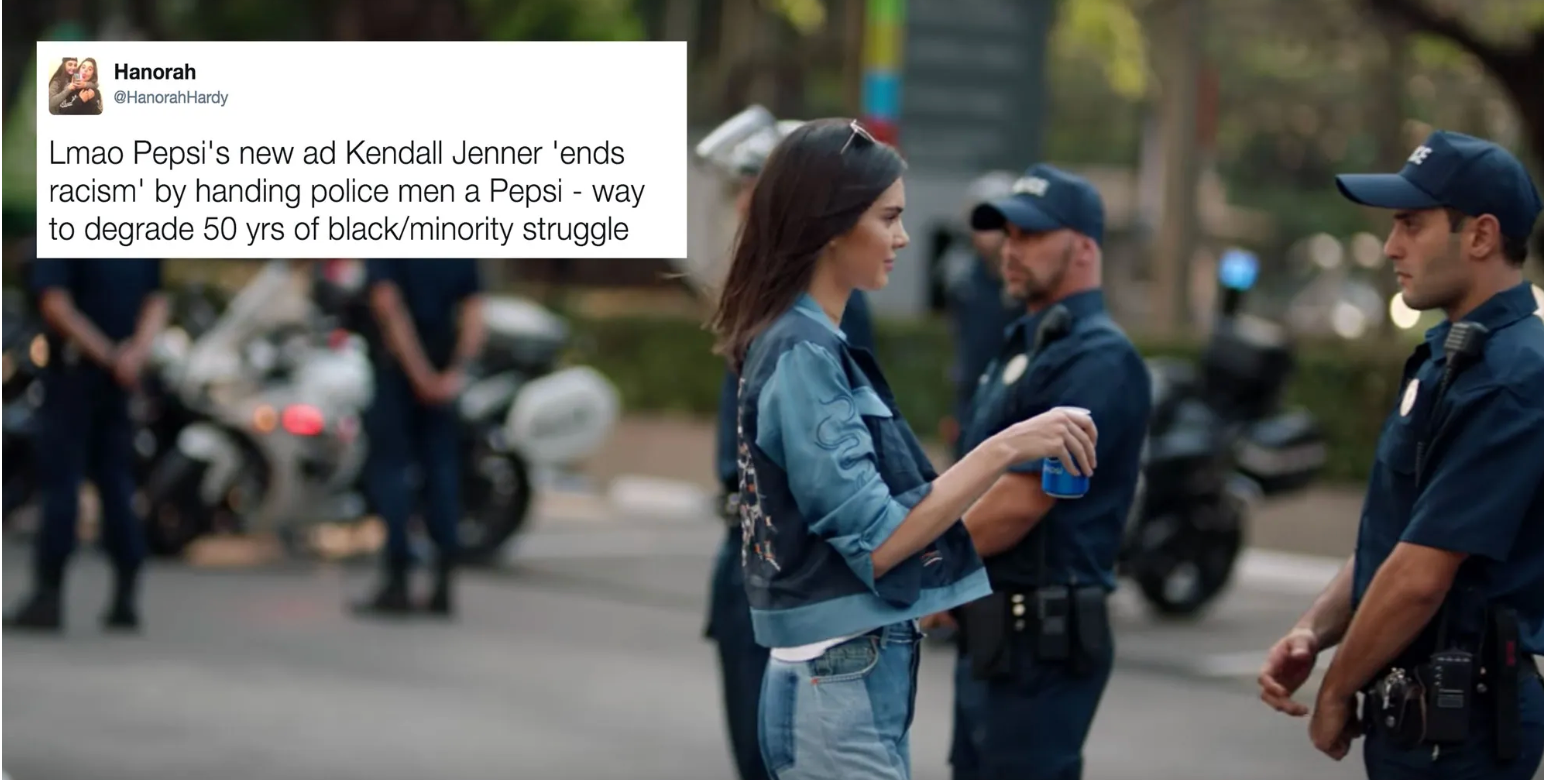
Image source: Glamour
Then there’s Burger King UK. The brand meant to highlight a scholarship for female chefs by tweeting “Women belong in the kitchen.” The punchline came later in a thread, but the outrage came first. Turns out irony doesn’t fit neatly into a tweet.
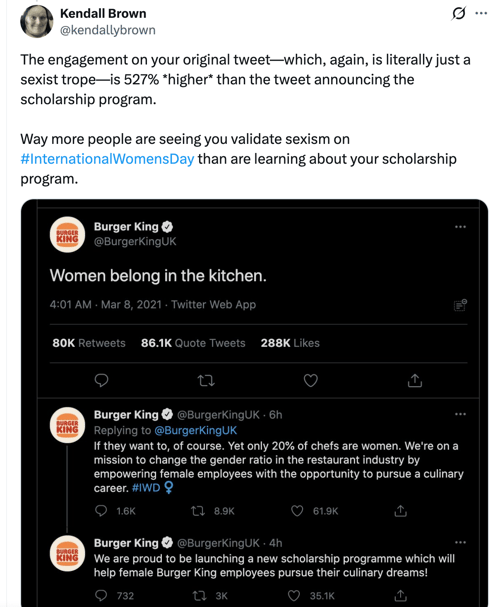
When trendjacking flops, it’s embarrassing at best. Worse, it chips away at trust. And the worst possible outcome: it makes light of serious social situations or offends people.
Gamble explains the consequences of when trendjacking goes wrong. “Trend jacking can definitely damage brand credibility and equity. We’ve seen this happen when brands jump on trends that are inappropriate or just completely misaligned with what they normally put out. It can push loyal customers away, make the brand look tone-deaf or out of touch, or even attract negative attention. And while trends move fast, rebuilding trust does not,” said Gamble.
The 3 do’s and 3 don’ts of trendjacking
All these examples highlight why Gamble said trendjacking is "high-risk, high-reward." It can either help you go viral and boost your customer acquisition, or it can turn a portion of the population off from your brand forever.
So, how do you get it right? Here are the dos and don’ts Gamble suggested.
Gamble’s 3 trendjacking dos
1. Make sure the platform and format make sense
A trend on TikTok is not the same as a trend on Instagram. If you’re not already active and creating content in the format where the trend lives, it’s probably not going to perform well. You have to show up where the trend is native.
2. Do a quick risk check
Trend jacking has upside, but it also comes with real risks. If the trend is controversial, easy to misinterpret, or simply not worth the blowback, it’s better to sit it out. A trend that lasts a week or two isn’t worth long-term reputational damage.
3. Know what the follow-up is
Don’t jump in and disappear. Before participating, know how you’re going to tie it back to your broader brand, campaign, or content strategy. Otherwise, it becomes a “cool moment” with no real impact.
Gamble’s 3 trendjacking don’ts
1. Don’t show up late
When it comes to mistakes, the biggest one is joining way too late and missing the peak of the trend. Trends move fast. There’s that fun moment where everyone is participating, and then suddenly it becomes played out, and viewers are tired of seeing it. Showing up after that point is not a good look.
2. Don’t ignore platform context
A trend on TikTok doesn’t always translate to Instagram. Even though brands love to repurpose content, they have to think about whether a trend should stay on its native platform or if it actually makes sense to bring it somewhere else.
3. Don’t do it “just because.”
What’s your goal? Are you hopping on the trend because competitors are doing it, or are you trying to drive reach, engagement, conversation, or even just experimentation? There needs to be some level of intention behind it, even if it’s small. Having a clear sense of why you’re participating will almost always lead to better outcomes.
The future of trendjacking
As social media cycles get faster and short-form video continues to dominate, trends will keep rising and falling overnight.
The brands that win will understand where trends start and who to partner with to make them their own.
“Brands should be leaning on creators. Creators are the ones driving and shaping trends, so if a brand wants to do this well and make it feel natural, partnering with creators is the best path. That could mean having creators in your network who are great at hopping on trends and integrating your brand organically,” said Gamble.
Gamble also explained that brands can bring creators in as advisors or sounding boards to help them spot opportunities or call out when something isn’t worth doing because it’s too risky.
The future of trendjacking looks less like piggybacking and more like co-creation. Winning brands will know when to jump in, when to sit out, and when to let creators lead.

.png)
-2.jpg)