
“I love pancakes.”
So you hate waffles?
What if I can’t eat gluten?
Must be nice to afford maple syrup.
That first sentence didn’t seem controversial. But give it three seconds in a comment section and suddenly it is.
Welcome to the Bean Soup Theory, the idea that no matter the topic, someone will find a way to make it about them. It's also called the "What About Me Effect," and honestly, that’s the most fitting title.
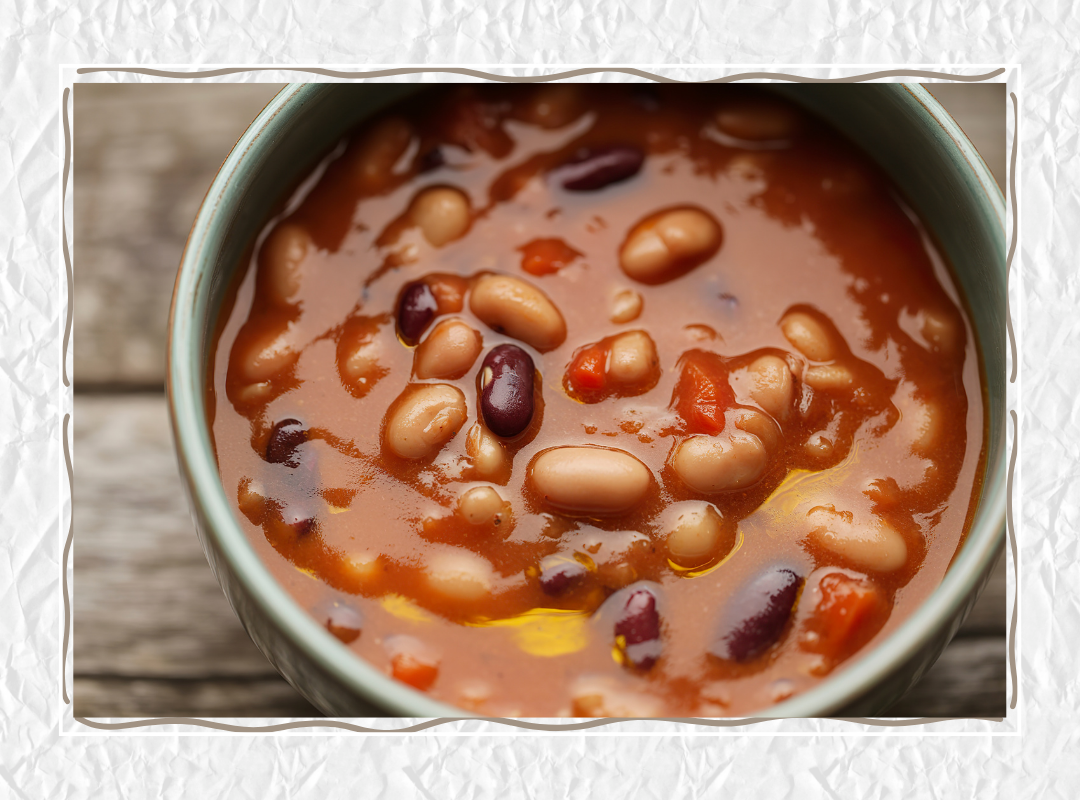
The theory comes from a viral video of a woman making bean soup with different types of beans to help women with period pain. The comments weren’t about technique or about saving the recipe, they were about substitutions… of the beans….. On a bean soup recipe video.
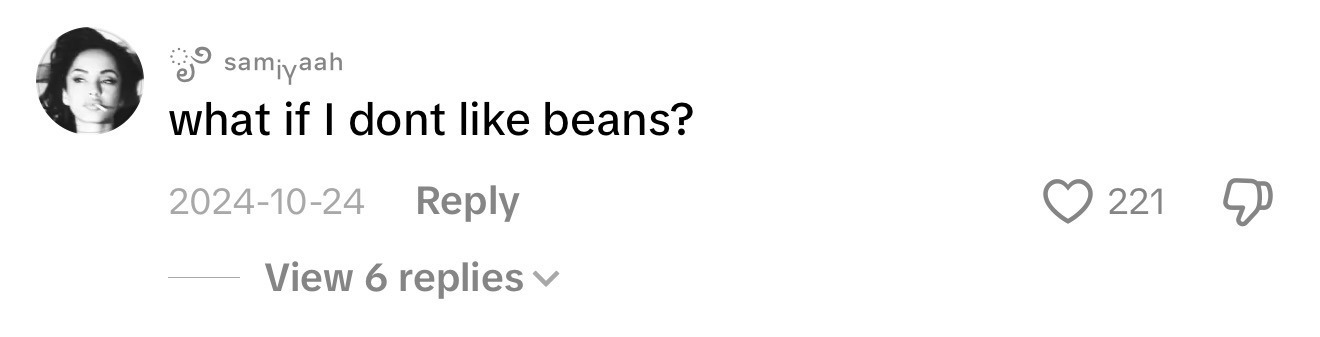
It's like watching mac and cheese recipes and asking what can be subbed for the cheese.
The idea that maybe the video simply wasn’t for them didn’t really float.
On TikTok, neutral content no longer exists. A mac and cheese recipe isn’t just a recipe. A $300 grocery haul isn’t just budgeting. A “day in my life” isn’t just routine.
The point of the video doesn't fit into every single person’s unique situation. And the comment section is where all of these different realities collide into one giant cluster of opinions, arguments, and the occasional celebrity lurking with a burner account (we heard Jennifer Lawrence has a TikTok account to participate in comment debates).
Why Nothing Feels Neutral Anymore
Can we know for sure why this is happening?
Not exactly. But the intensity isn’t random.
Part of it is the main character's energy, taken to an extreme. A simple recipe becomes, “Okay, but what if I don’t eat dairy?” or “Groceries cost double where I live.” It’s taking a general statement and immediately filtering it through personal circumstances.
The cost of living is top of mind. Housing feels out of reach. Groceries feel expensive. Even small indulgences require a quick glance at the bank account.
When financial stress is high, comparison becomes automatic, especially when people look like you.
Think of TikTok creator, Nicole Stevenson, whose whole brand centers on feeding her family on a $300 monthly budget. You could use this as budgeting advice: what cuts does she make to keep her budget in check, which meals does she use, and how does she stretch her produce? It CAN be budgeting advice, but it doesn’t land like that…

Viewers don’t just watch, they measure. If they can’t make that number work in their own lives, the content starts to feel unrealistic and dishonest.
In places like Canada, where grocery prices vary significantly by region and inflation has been relentless, that tension intensifies.

What could have been a budgeting tip turns into a cost-of-living debate.
But there’s another layer.
TikTok collapses context at scale. A creator in one economic reality is instantly visible to millions in completely different ones. Different currencies, cultural norms, and spending expectations.
There’s no shared baseline reality anymore. There’s also the fragility of relatability.
Social media trains us to find ourselves in content. We follow creators because we see something familiar or we find ways to relate to them.
But the moment that alignment breaks, even slightly, the instinct is to reassert your own reality. If you can’t see yourself in the content, you insert yourself into it. 
Nicole lives in what looks like a normal home — a kitchen many people can see themselves in. But instead of feeling inspired, some think: She’s like me… so how is she doing this? Then the story shifts. I have six kids. There’s no way I could do that. She must be lying. Her kids must be starving.
Projection is easy. And the easiest place to put it? A comment section. Because commenting feels like participation and control.
The Comment Section Is Now Audience Research
Comment sections are loud and dramatic, and sometimes, completely unhinged.
It’s easy to dismiss that as internet chaos, but what if brands and retailers used it as insight?
Because underneath the sarcasm, projection, and pile-ons is something incredibly valuable: unfiltered audience psychology.
When a budgeting video turns into a debate about honesty, that’s distrust surfacing in real time. When a product demo sparks comments about rent prices, that’s economic sensitivity. When viewers argue that something “wouldn’t work here,” that’s about geography and access.
Comment sections show you how specific audiences see the world. They show you who your audience is and also who they’re not, which is just as important. Every friction point is data.
So how can you leverage comments via the Bean Soup Theory?
Step 1: Stop Reading Comments Emotionally. Start Reading Them Diagnostically
Instead of asking, “Why are people being like this?” ask:
- What insecurity is being exposed?
- What assumption did this content trigger?
- What context is missing?
- Who feels excluded here?
Most heated comment sections usually reveal one of four things:
- Price Sensitivity – “Must be nice to afford that.”
- Relatability Gaps – “That wouldn’t work where I live.”
- Trust Issues – “There’s no way that’s true.”
- Identity Friction – “This isn’t for people like me.”
Your audience is telling you how they categorize themselves, and that can help you frame your emails, ad creative, and more. For example, if you see the same comment 20 times, that’s basically a content prompt that fuels your next campaign. Take these three examples:
Comment: “That wouldn’t work where I live.”
→ Create: “How this changes by region.”
Comment: “Must be nice to afford that.”
→ Create: “How to do this on three different budgets.”
Comment: “This feels unrealistic.”
→ Create: “What this doesn’t show.”
You don’t argue in the comments. You answer in the next post.
Now the comment section is fueling your strategy.
Step 2: Identify Who the Content Attracted vs. Who It Agitated
Every post attracts three groups:
- The target audience
- The adjacent audience
- The misaligned audience
The comment section shows you which group showed up. If your $300 grocery haul becomes a cost-of-living war, you may have reached:
- People outside your intended income bracket
- People in different economic regions
- People who are already financially stressed
That doesn’t mean the content failed. It means your reach expanded beyond your positioning. That’s useful because now you know:
- Who sees themselves in your brand
- Who feels alienated by it
- Who wants to argue with it
So not only does it help you with product and marketing positioning, but it can also tell which creators don’t meet your target audience.
Step 3: Mine the Comments for Messaging Clarity
If your messaging is simply: “Here’s what we have,” then projection will fill in the blanks.
But if your messaging clearly answers:
- “Here’s who this is for.”
- “Here’s the context.”
- “Here’s the outcome.”
You reduce ambiguity, and ambiguity is what fuels projection.
Let’s go back to Nicole Stevenson and her video about her $300 grocery haul for her family.
A video titled “Here’s everything I bought for $300 this month” invites comparison.
On the other hand, a video titled “Three ways I stretch produce for a family of four” invites utility.
The product (or budget) hasn’t changed, but the framing has. And that leaves less room for projection and more room for value.
Step 4: Pressure-Test Your Content Before You Post It
Before posting, run your content through a psychological filter. Ask:
- What insecurity could this accidentally trigger?
- What assumption am I making about the viewer’s reality?
- What part of this requires shared context to land properly?
- Am I showing outcome without process?
- Am I showing privilege without acknowledging it?
One reason Bean Soup comments explode is because viewers see outcomes without constraints. The clean kitchen without the chaos. The grocery total without the coupons. The lifestyle without the trade-offs. It feels unrealistic.
Showing constraints does three things:
- Builds trust
- Reduces negative comparison
- Signals awareness
You don’t need a disclaimer paragraph, but even a sentence of grounding context can shift the entire tone of the comment section. Acknowledging trade-offs (“We don’t buy snacks,” “We meal prep heavily,” “We live in a lower cost-of-living area”) preempts the “must be nice” comments.
Because now the story feels complete.
So… It Was Never About the Beans
The Bean Soup Theory isn’t about people being dramatic.
It’s about comparing cultures amid economic pressure. People want to be seen and for their reality to be acknowledged. And social platforms have trained them to insert themselves into every narrative because it's so easy.
Negative comments will happen. That’s not the problem. For brands, the question is no longer:
“What are we posting?” and it's not more about, “What does this represent to the person watching?”
And look, even pancakes can become a debate. If you don’t understand why, your audience will explain it to you, super loudly.



.png?width=300&height=300&name=Untitled%20design%20(36).png)
.png?width=300&height=300&name=May%20lists%20and%20blogs%20(14).png)