
Key Talking Points
- NVIDIA OpenClaw autonomous AI agents transforming enterprise workflows and digital labor economics
- Shift from chatbots to agentic AI systems enabling real-world task execution and automation at scale
- NemoClaw secure sandbox environment powering enterprise adoption of autonomous AI agents
- Software 3.0 multi-agent systems redefining productivity and the future of AI-powered workforces
The atmosphere at the San Jose Convention Center during GTC 2026 (March 16–19) was electric, reminiscent of the early days of the internet or the launch of the original iPhone.
NVIDIA CEO, Jensen Huang, took the stage for a keynote that was less about incremental hardware updates and more about a fundamental rewriting of the rules of technology.
The central theme of his address was OpenClaw, an open-source framework for autonomous AI agents that Huang hailed as the most significant software release in history.
Comparing its impact to that of Linux, HTML, and ChatGPT combined, Huang declared that we have officially moved from the era of "chatbots" to the era of "agentic AI." Here are the ten key takeaways from Jensen Huang’s definitive speech on the future of OpenClaw and the autonomous agent economy.
OpenClaw Is "The Next ChatGPT" (With a Vital Difference)

Huang did not mince words, repeatedly calling OpenClaw the "next ChatGPT." However, he clarified a profound distinction that defines the current technological shift: “ChatGPT gave AI a voice; OpenClaw gives AI a hand.” While standard chatbots operate within the confines of a digital conversation, providing text-based answers, OpenClaw agents are designed to execute real-world work autonomously.
They don't just answer questions; they can read local files, manage a complex calendar, interact with various APIs, and execute shell commands to accomplish multi-step tasks independently. This transition from a communicative interface to a functional, active participant marks the beginning of the "Action Era" in artificial intelligence, where software finally does the heavy lifting.
The Shift from Chatbots to Agents Is Already Over

The era of the standard Large Language Model (LLM) "chatbot" is officially historical. Huang announced that we have entered the "Age of Agentic AI," where the primary value of AI is its ability to take autonomous action without constant human prompting. He stated that in just a few short weeks, the global tech industry has fundamentally pivoted away from simple text generation.
The goal is no longer building smarter "talkers" that can mimic human prose, but deploying thousands of specialized, capable doers. This shift means that AI is moving from being a search tool to becoming a digital workforce, capable of handling the logistics and execution of projects from start to finish.
NVIDIA NemoClaw: Bringing Security to the OpenClaw "Sandbox"

The biggest barrier to adopting autonomous agents has always been the security risk associated with giving software control over a system. In response, NVIDIA announced NemoClaw, an enterprise-grade stack that wraps the open-source OpenClaw framework in a vital layer of professional guardrails.
NemoClaw includes OpenShell, a secure, sandboxed environment where agents can execute code and shell commands without putting the host system or sensitive company data at risk. This "security first" approach allows corporations to trust agents with critical infrastructure. By solving the trust gap, NVIDIA has ensured that OpenClaw can move from experimental hobbyist projects into the secure, high-stakes environments of global finance, healthcare, and industrial manufacturing.
Every Company Needs an OpenClaw Strategy"

Huang issued a definitive mandate to corporate leadership worldwide: "Every company in the world today needs to have an OpenClaw strategy." In 2026, he argued, competitiveness will no longer be measured by the size of a human workforce, but by how effectively a company deploys and manages its fleet of autonomous agents.
Those who fail to integrate OpenClaw into their operations risk immediate obsolescence in a market that is moving at "agentic speed." This strategy isn't just about efficiency; it's about scalability. Companies that leverage these agents can handle massive increases in output without the traditional overhead, fundamentally changing the baseline for what it means to be a productive enterprise in the modern era.
OpenClaw’s Growth Eclipses Linux (250K GitHub Stars in 60 Days)

The speed of OpenClaw’s adoption (which evolved from an influential project called Clawdbot) is unprecedented in the history of open-source software. Huang noted that OpenClaw reached levels of developer adoption in just a few weeks that took Linux and other foundational technologies decades to achieve.
The framework officially surpassed 250,000 GitHub stars in roughly 60 days, demonstrating that the global developer community has abandoned traditional, linear software development in favor of building with agentic frameworks. This grassroots explosion confirms that OpenClaw is the new "operating system" for the AI era, providing a common language and set of tools that allow developers to build increasingly complex and reliable autonomous systems.
Local Agents Are the Foundation of Enterprise Security
In a major endorsement of "Edge AI," Huang emphasized that the most secure and capable enterprise agents should run locally. NemoClaw is specifically optimized for NVIDIA RTX workstations and AI PCs, allowing companies to keep their most sensitive data (including private codebases, legal documents, and confidential communication) behind their own firewall while still leveraging the full power of agentic autonomy.
This "local first" philosophy addresses the growing concern over data privacy in the cloud. By running OpenClaw on local hardware, businesses can maintain total sovereignty over their intellectual property. Huang made it clear that while the cloud is for training, the local workstation is where the actual, secure work of the agentic workforce happens.
Re-skilling for the "Agent Manager" Economy

The role of the software developer and information worker is changing overnight. Huang suggested that the future of workforce re-skilling is not about teaching every person how to write traditional code, but teaching everyone how to become an "Agent Manager."
Employees will shift from performing repetitive digital tasks to defining high-level objectives, setting ethical guardrails, and managing the output of autonomous agents that execute the actual technical work.
This democratizes the ability to create complex software and manage large-scale projects. The "Agent Manager" will be the most sought-after title of 2026, requiring a blend of strategic thinking, domain expertise, and the ability to orchestrate multiple AI agents toward a single goal.
"Software 3.0" Is Built with Agents, Not Functions
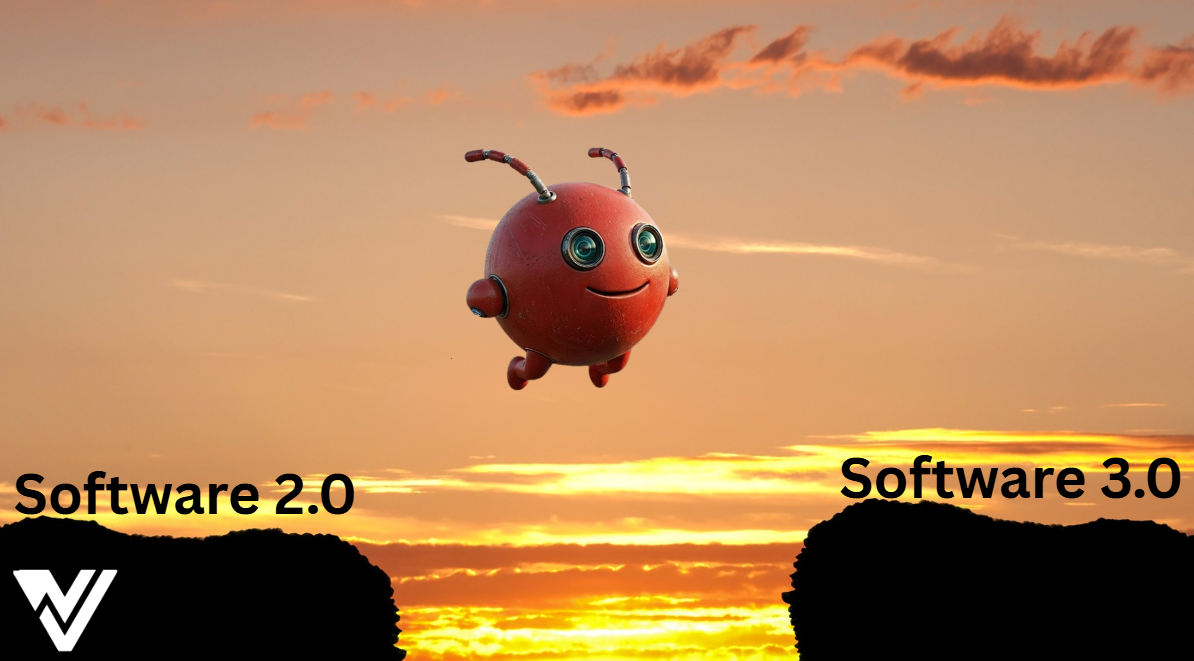
If "Software 1.0" was imperative code written by humans and "Software 2.0" was machine learning models trained on data, Huang defined "Software 3.0" as applications built entirely through the orchestration of agents. Instead of calling specific, pre-written functions or static APIs, Software 3.0 applications define a goal, and a network of specialized OpenClaw agents collaborates to determine the necessary steps, execute the actions, and deliver the final result.
This "multi-agent system" approach allows for software that is dynamic and self-correcting. It represents a move away from rigid, brittle code toward fluid, intelligent systems that can adapt to new information and changing environments in real-time, effectively building themselves on the fly.
Vertical Integration: NemoClaw Optimized for Blackwell and BlueField

NVIDIA's enduring strength remains its full-stack approach, and Huang highlighted how NemoClaw is vertically integrated with NVIDIA hardware. It is optimized to run with maximum efficiency and security across the entire product line, from the massive Blackwell data center GPUs to BlueField DPUs (which can manage network-level agent security) and the RTX AI PCs on professional desks.
This integration ensures that the compute fabric perfectly matches the demands of autonomous agency. By optimizing the software to the silicon, NVIDIA ensures that OpenClaw agents run with lower latency and higher reliability than on any other platform. This synergy between hardware and software is what allows for the high-speed, real-time reasoning required for truly autonomous agents.
Demarginalizing the Marginal Cost of Digital Work

Perhaps the most significant long-term impact of OpenClaw is the fundamental change in the economics of digital labor. Huang argued that by open-sourcing the agentic framework, NVIDIA is helping to demarginalize the marginal cost of work. An autonomous agent can operate 24 hours a day, seven days a week, for little more than the cost of electricity and compute cycles.
This shift will fundamentally alter productivity metrics and output capacity for every industry that relies on digital labor, from software engineering to marketing and research. The "marginal cost of a task" is trending toward zero, allowing for a level of innovation and production that was previously impossible due to the constraints of human time and cost.
The Flood Gates Are Open
Jensen Huang’s keynote at GTC 2026 will be remembered as the definitive moment autonomous agents broke into the mainstream, signaling the end of the experimental phase for AI. By providing both a massive, community-driven open-source framework in effectively removed the final technical and ethical barriers to global adoption.
The floodgates are now officially open, and the global economy is poised to witness an unprecedented explosion of agent-led innovation across every sector. This shift moves us beyond simple automation and into a future of true digital agency, where specialized AI workforces handle the complexity of execution, allowing human creativity to scale at a velocity previously deemed impossible.
-1.png)
.png)

.png)