
- Align creator selection with campaign KPIs, not just follower count or reach
- Use audience demographics and psychographics to ensure true brand alignment
- Prioritize engagement quality and conversion signals over vanity metrics
- Leverage predictive data to forecast ROI before launching your campaign
Imagine this. You’re the head of marketing at your company. Your influencer marketing manager marches into your office and declares some great news:
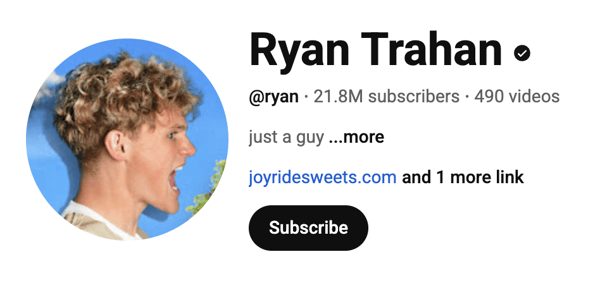
“I know Ryan Trahan, and he’s agreed to run a creator campaign with us.”
You’re stoked. Trahan has 21 million YouTube followers alone. So, you pay big bucks for Ryan Trahan to promote your brand.
Launch day arrives.
Trahan posts the video. The thumbnail is chaotic, the title is something like “I Tried a 27-Step Skincare Routine With Only $1.42!” Millions of teens click.
And then…yep. Nothing.
Because there’s one tiny detail that derails the campaign: you run a premium women’s skincare brand, the kind people buy after reading ingredient lists, dermatologist reviews, and at least three comparison blogs.
Ryan’s followers are confused (“bro why is he washing his face in a gas station sink?”). And the actual skincare shoppers don’t see the campaign because they’re not tuning in for penny challenges or chaotic endurance vlogs.
You end up with a hilarious video, but zero impact on the customers who buy luxury skincare. Bye-bye budget. Nice knowing you.
So what should brands do instead?
This exact mismatch (i.e., big creator on board but in front of the wrong audience) is why experts across the industry push brands toward a data-first creator strategy.
At New York Advertising Week, during this panel , Snap’s Aarti Bhaskaran asked Influential’s Chief Growth Officer, Kimberly Ladevaia, how brands can get creator partnerships right.
“First and foremost, Influential is always using data to inform who is that creator’s audience,” Iadevaia said. “You can’t just decide,” and explained how you need audience data to figure out which creators align with the customers you want.
Iadevaia also noted that brands need to understand what creators post organically. If your team doesn’t know their day-to-day content and then suddenly inserts your brand into their feed, the disconnect can tank the results before the campaign even begins.
The rest of this article will cover six data-driven approaches and give you real examples to make sure you pick the right creator for your upcoming influencer campaign.
6 ways to use data to build a successful influencer campaign based on real case studies
1. Use social listening and user-generated storytelling
Before you ever brief a creator, you need to know what your audience is already talking about. That’s where social listening tools come in.
These tools surface the conversations, hashtags, fan theories, trends, and user-generated stories bubbling up across platforms so you can spot opportunities long before they show up in a dashboard. In other words, you’re not guessing what people care about. You’re watching it unfold in real time.
Clinique’s Black Honey comeback campaign is the perfect example of why this matters.
Back in 2021, a random corner of TikTok (#tolkientok) figured out the exact lipstick Liv Tyler wore as Arwen in The Lord of the Rings, according to Glamour. That lipstick was Clinique’s Almost Lipstick in Black Honey, a product launched in 1971.
Fans started posting side-by-sides, recreations, nostalgia-fueled makeup looks — you name it. TikTok creators picked it up, beauty communities amplified it, and suddenly Black Honey had a full-blown renaissance on their hands.
Clinique didn’t force anything. Instead, they watched the trend, understood what fans were responding to, and stepped in with brand storytelling and product availability updates at exactly the right moment. The internet did the rest.
Results
- The hashtags #blackhoney and #cliniqueblackhoney hit 242 million views on TikTok in a single year.
- The lipstick sold out multiple times that year.
- It landed on TikTok’s Gift Guide, a list directly tied to creator influence.
Takeaway for marketers
Listen (with the help of social listening tools) for organic fan-led moments, especially nostalgia, fandom deep-dives, or unexpected cultural rediscoveries. When the data shows something’s catching fire (hashtags surging, mentions climbing, creators jumping in), amplify the story your audience is already telling, not the one you wish they were telling.
2. Use audience alignment data to find fit and activate your community
Louder for the folks in the back: Follower count doesn’t matter. Fit does.
And audience alignment data helps you find that fit. It shows who makes up a creator’s audience (e.g., their age, location, interests, and even brand affinities), so you can see whether that community mirrors your target buyer.
Winning brands will capture that data and then activate it by directly engaging communities within those demographics.
Gymshark is a great example of a brand that knows its audience and has successfully built a community around it.
Back in the day, the British fitness brand faced a major challenge: competing with Nike and Adidas on a fraction of their budgets. But, instead of just chasing huge creators, Gymshark built relationships with micro-influencers whose audiences already reflected its ideal customers.
Next, the brand launched the #Gymshark66 challenge, asking people to commit to a 66-day fitness goal, share their journey, and tag the brand. This challenge turned audience insight into community momentum.
As a result, TikTokers documented real progress, supported each other, and transformed the challenge into a movement. Gymshark’s steady posting (around 40 videos a month) kept that energy alive.
Results
- 3.7 million followers and 57 million likes on Gymshark’s TikTok account
- Millions of views and thousands of comments on #Gymshark66
- A strong lift in engagement rates compared with competitors using macro influencers
Takeaway for marketers
Use audience data to find your people, develop a community, and then involve them in your growth campaigns.
3. Use customer data to activate your existing fans
One proven way to find the right creator partnerships is to look at your customer data. Metrics such as repeat purchase behavior, referral activity, tagged posts, and product mentions help you identify loyal fans who are already sharing your brand story.
Glossier built its influencer strategy on this foundation. The brand identified loyal customers who were already buying products and then invited them to join its ambassador program. These fans became micro-influencers, creating authentic, everyday content that felt real because it was real.
Results
As reported in Tomson:
- 600% year-over-year revenue growth
- 40% lower customer acquisition cost
- 75% increase in repeat purchases
- 70% of online sales driven by ambassador referrals
Takeaway for marketers
Start with the customers who already love your brand. Use data to identify them, connect with them, and then give them tools to tell their story.
4. Use behavioral data to identify organic creators who already fit
Once you’ve studied your customer base, look outward to creators who already show interest in your brand. Behavioral data helps you find them by revealing how people use your product, what content they engage with, and what topics they discuss. Unlike customer data, which tracks transactions, behavioral data highlights intent and habits to help you identify genuine brand advocates before you reach out.
That’s exactly how Notion built its early influencer program. As Ben Lang, Notion’s former Head of Community, shared in a Medium article, the team noticed YouTubers organically using Notion to manage their video production workflows.
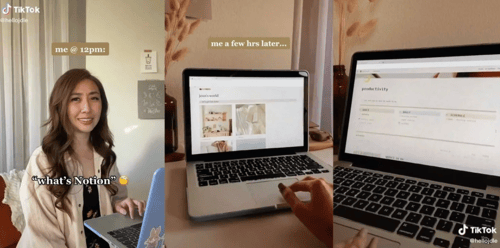
Instead of running cold outreach campaigns, they started by partnering with those creators, asking them to produce videos about how they use Notion. The results were immediate and lasting.
Results
- Evergreen signups that continued months after videos went live
- 2–5x baseline signup increases in regions where creators posted
- Lower cost per acquisition than traditional ads
Takeaway for marketers
Use behavioral data to identify creators who are already using your product in the wild. Partnering with people who genuinely use what you sell turns their content into social proof that drives sales.
5. Use predictive data to anticipate success
Predictive data uses AI and machine learning to forecast which creators and campaigns are most likely to perform well. And it does it before you even get on an intro call.
How? It analyzes patterns from millions of past campaigns, looking at factors like audience authenticity, engagement probability, and competitive benchmarks. Unlike customer or behavioral data, which describe who your audience is or what they’re doing now, predictive data tells you what’s likely to happen next.
L’Oréal used this data to inform its Biotherm Aquasource Gel launch. Partnering with BENlabs, the brand used AI-powered predictive analytics to find creators whose audiences naturally aligned with its skincare values.
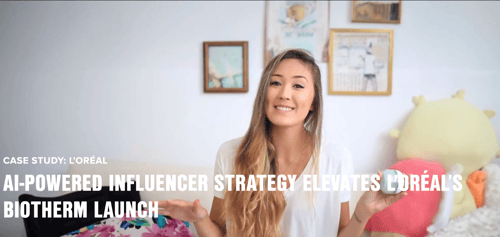
From a pool of over 13 million vetted influencers, BENlabs’ AI identified those most likely to generate authentic engagement and positive sentiment. The system also provided competitive insights and performance forecasts, helping L’Oréal fine-tune messaging and maximize impact before the first post went live.
Results
- 4.5M views
- 4M impressions
- 200K likes
Takeaway for marketers
Use predictive data tools to choose creators and messages based on what’s statistically most likely to resonate. It turns influencer marketing from a guessing game into a science, helping you build campaigns that connect from day one.
6. Use AI and psychographic data to match creators with audience personality profiles
Psychographic data focuses on what drives people, including their interests, values, motivations, and lifestyles. When paired with AI, marketers can analyze large-scale audience behaviors and social conversations to find creators whose followers share those traits.
ESSENCE partnered with Influential to connect the brand’s cultural mission of celebrating Black excellence with the right creators.
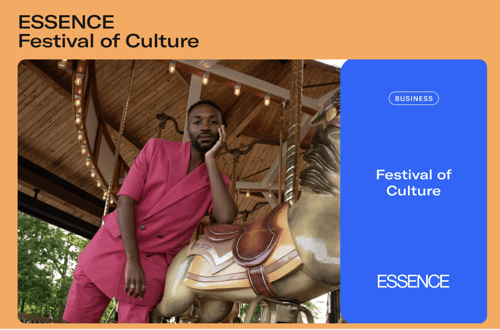
Using Influential’s AI-powered influencer identification platform, ESSENCE’s team analyzed millions of creators across social media to pinpoint those whose audience interests, values, and behaviors aligned with the spirit of the festival.
Results
- $684K in ticket sales, the festival’s highest-grossing campaign to date
- Click-through rate above benchmark, proving strong audience resonance
- Record online engagement, driving anticipation and community participation
Takeaway for marketers
AI and psychographic data can translate cultural connection into measurable performance. By matching creators to audience mindset and values, brands can create campaigns that resonate emotionally and deliver results, to boot!
So, if MrBeast calls, tell him no (just kidding)
But do remember: influencer marketing wins when it’s rooted in data, not popularity.

.png)
.png)